
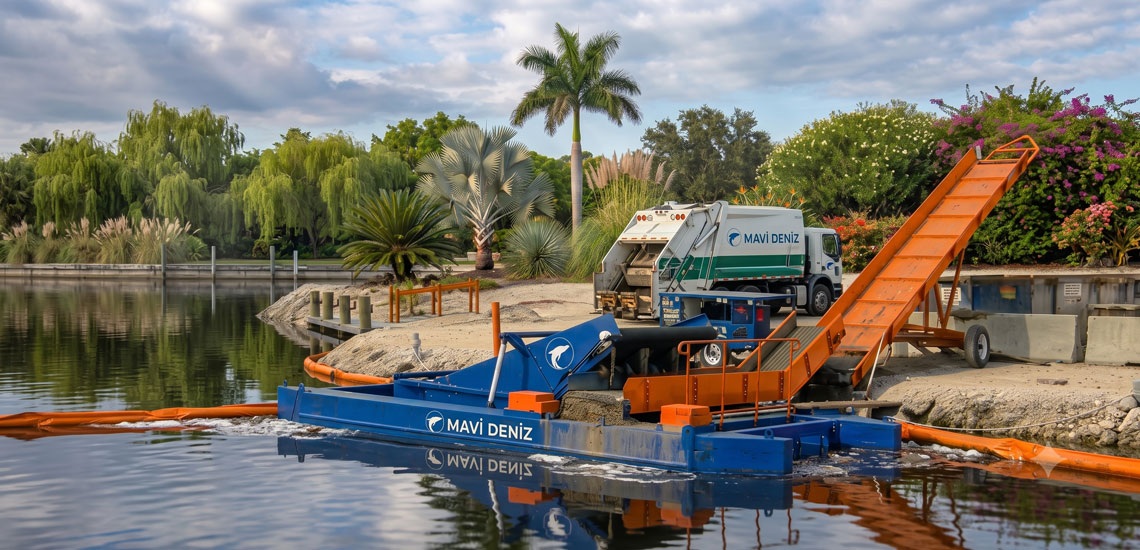
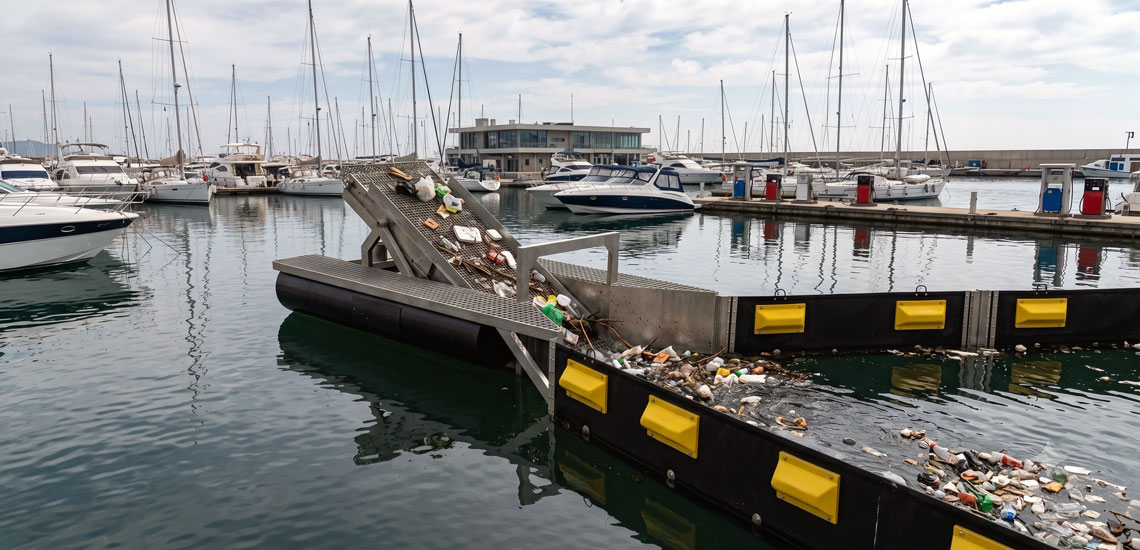
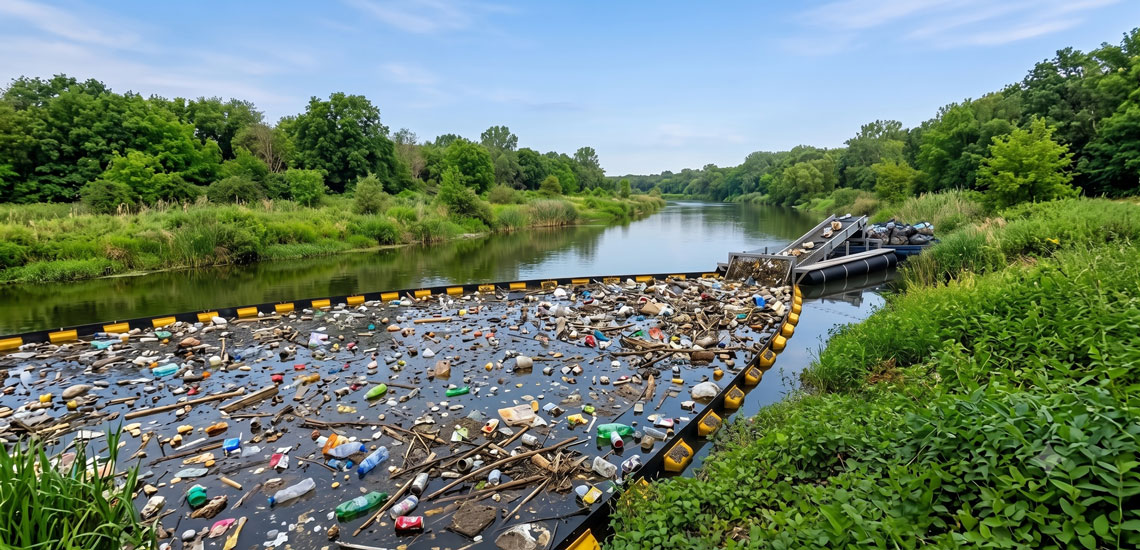
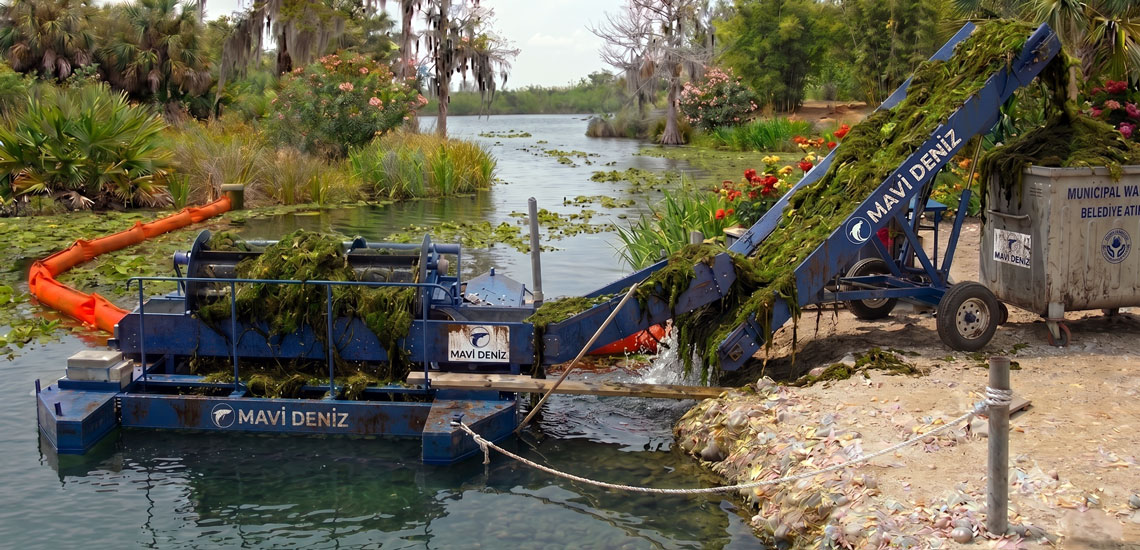
An Automatic Floating Trash Conveyor System is a mechanised, continuously operating water-cleaning machine. Instead of relying on workers in boats with nets to scoop up garbage, these systems are installed directly into a river, canal, or marina to passively catch and remove floating debris (like plastic bottles, microplastics, algae, and branches) before it reaches the open ocean.
Regardless of the specific design, almost all of these systems rely on a simple three-step process:
- The Funnel (Booms): Long floating barriers (called booms) are placed in the water in a “V” or diagonal shape. Using the natural flow of the river or tidal currents, these booms gently guide floating trash toward the mouth of the machine without trapping fish or blocking boat traffic.
- The Extraction (Conveyor): At the mouth of the system, a porous conveyor belt dips beneath the water’s surface. As the belt rotates, it scoops up the concentrated trash. Because the belt is made of mesh or perforated metal, the water simply drains right back into the river while the dry trash is carried upward.
- The Storage (Dumpster/Barge): At the top of the conveyor belt, the trash drops off into a collection bin. In a shore-based system, this is usually a standard municipal dumpster on the riverbank. In a floating pontoon system, the trash drops into onboard floating bins that are periodically swapped out or emptied by a local waste management boat.
Historically, marinas and cities cleaned water by paying crews to drive around in skimmer boats. Automatic conveyor systems replace that with a machine that runs 24/7.
Because they run constantly, they can handle massive surges of trash that wash downriver during heavy rainstorms—which is when 80% of river plastic actually moves. Many modern systems are 100% solar-powered and have smart sensors that send a text message to operators only when the dumpster is full, making them highly efficient and environmentally friendly.
Key Considerations
- Flow Velocity & Depth: Rivers with high flow rates require heavy-duty anchored booms and fixed-bank conveyors. Marinas with stagnant water require active skimmers or water-flow induction pumps.
- Type of Debris: Lightweight plastics and weeds require fine mesh belts, whereas large logs, branches, and heavy trash require steel flighted conveyors with heavy intake reels.
- Offloading Logistics: Determine whether trash will be dumped directly into a road-accessible container on land or if an onboard basket will be emptied via crane/boat.