
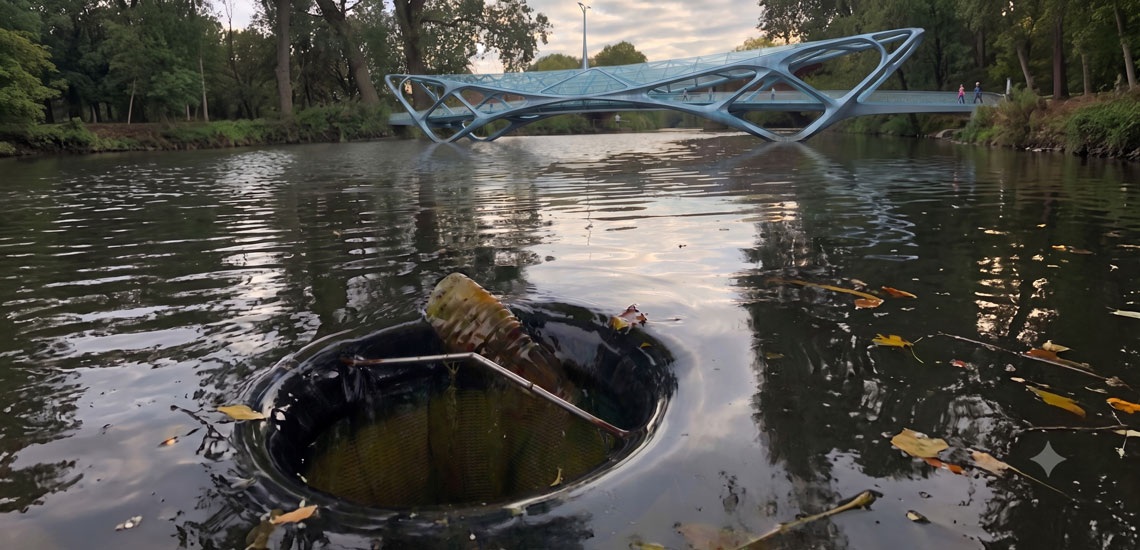
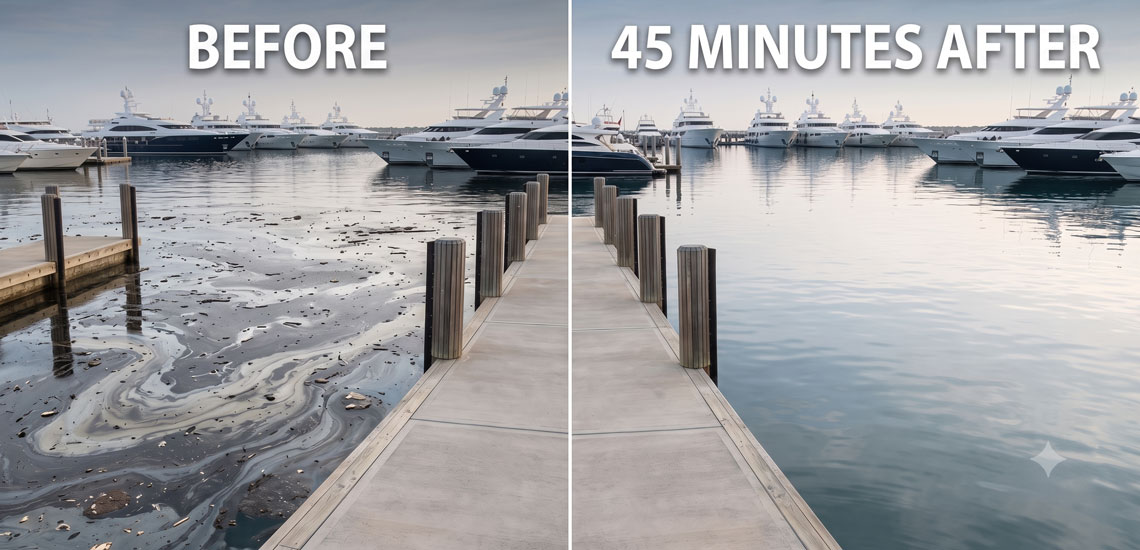
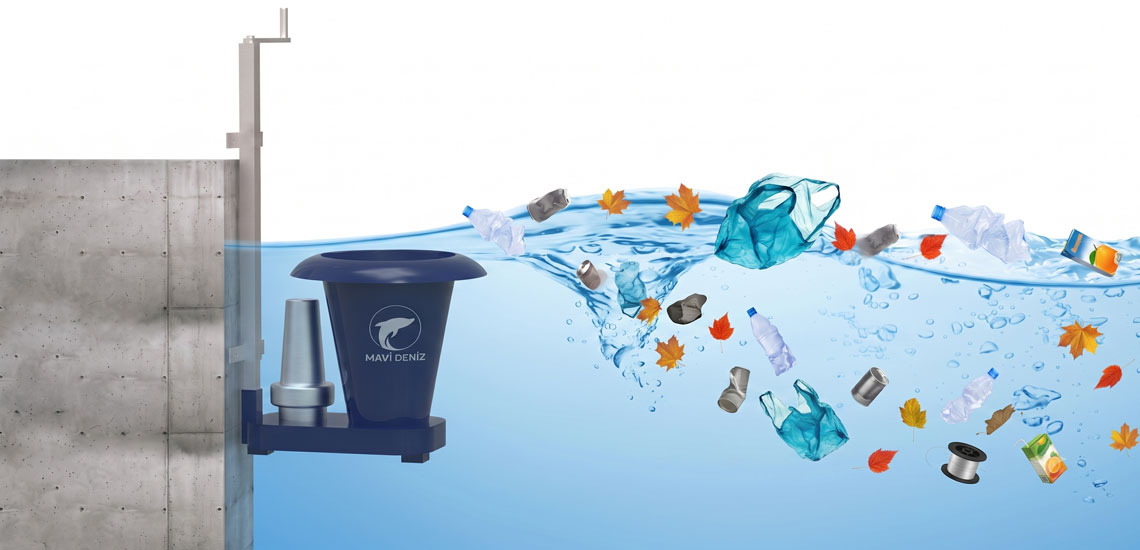
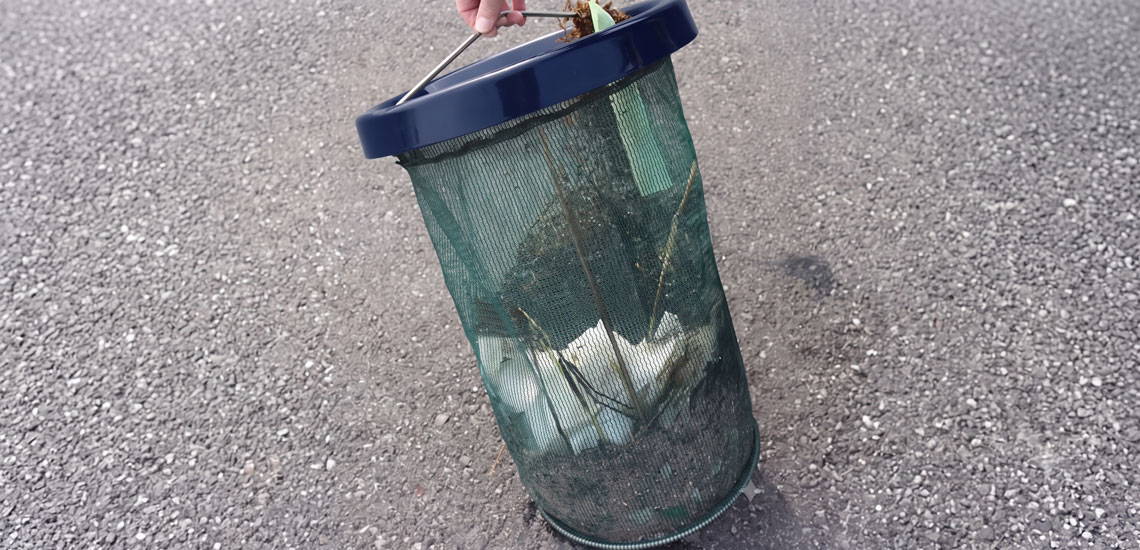
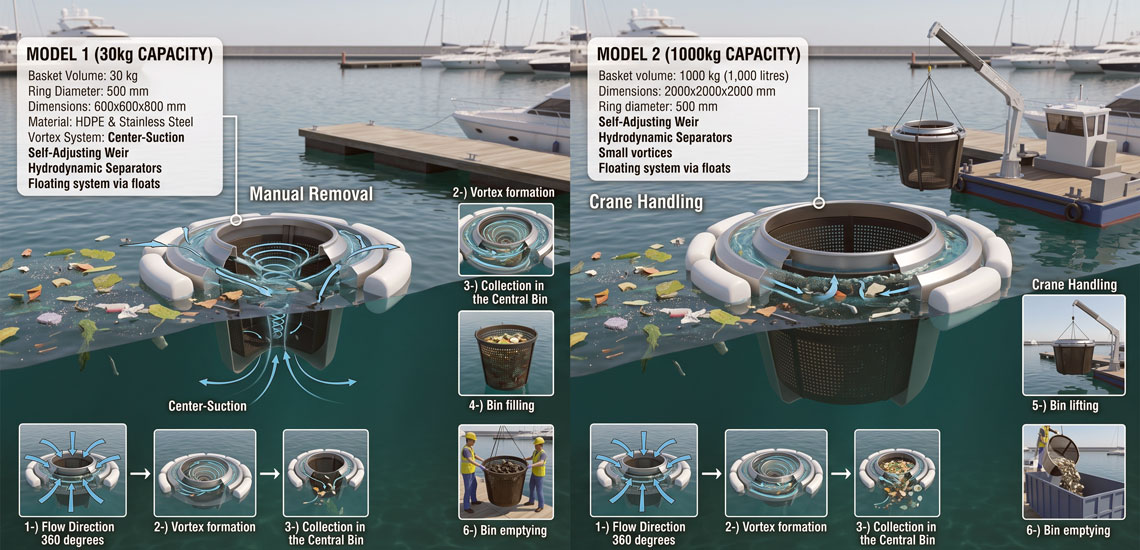
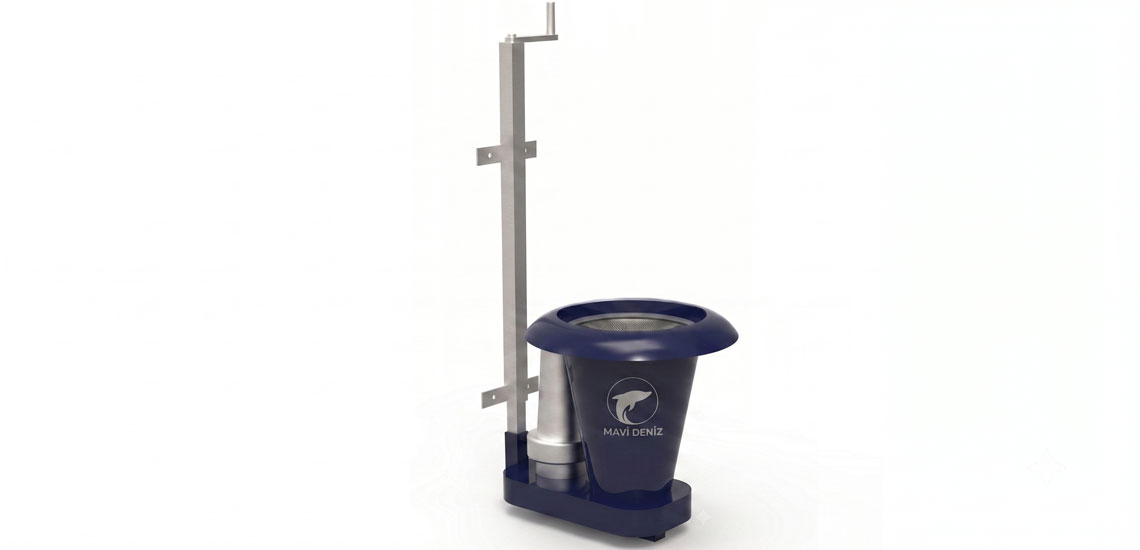
Essentially, it’s a trash can placed in the water that rises and falls with the water level. A submersible pump at the bottom draws in surface water. As the water passes through the filter bag inside the device, trash, plastics, and waste oils remain in the bag; the clean water is then released back into the sea through the pump or without a pump, can also be possible operation alternatives
1. What are its Key Features?
Continuous Cleaning: It cleans the surface continuously 24/7 as long as it’s plugged in.
Microplastic Capture: It has fine filter bags that can capture not only large trash (plastic bottles, bags, etc.) but also microplastics up to 2 mm.
Oil and Fuel Filtration: It contains special pads that can absorb harmful waste oils, fuel spills, and detergent residues from the water’s surface.
High Capacity: An average unit collects about 1.5 kg of trash per day and can continue operating until the bag reaches capacity (typically around 20 kg).
Still Water Design: Not for open oceans; Designed for calm waters such as marinas, harbours, yacht clubs, and lakes.
2. Who Benefits?
Marinas and Harbour Operators: Keeping areas where boats and yachts are located clean enhances aesthetics and increases customer satisfaction. It reduces cleaning costs and the workforce needed for businesses.
Local Governments and Municipalities: It is an efficient tool for keeping coastlines and public ponds clean.
Marine Life and Ecosystem: It prevents plastics from being ingested by marine life or from transforming into microplastics that enter the food chain.
Fishermen and Boat Owners: The risk of debris getting caught in propellers is reduced in clean waters, making maritime activities safer.
3. What are the Harms and Disadvantages?
Although it is a beneficial technology, this system also has some limitations that can be described as “harms” or “disadvantages”:
Energy Consumption: The pump requires continuous electricity to operate. If this electricity doesn’t come from renewable energy sources like solar or wind power, the device will create its own carbon footprint.
Requires Constant Human Intervention: The collected waste doesn’t disappear on its own. The bag inside the device must be manually emptied and cleaned by an operator daily or whenever it fills.
Risk to Small Organisms: Although very rare (fish can usually escape because the system draws water from the surface), very small marine creatures or juveniles may be accidentally carried into the bag by currents.
Limited Scope of Effect: It cannot operate in choppy seas, open oceans, or in areas with very strong currents. It is only effective in calm and sheltered waters.
Not a Solution to Large-Scale Pollution: The nets are not designed to lift large masses of debris, heavy pieces of wood, or huge piles of plastic; they can become clogged in such cases.
In summary, floating trash cans are a highly effective, practical, and innovative “first aid” tool for combating coastal pollution and raising environmental awareness; however, solving the problem at its source (not throwing trash into the sea) remains the top priority.