
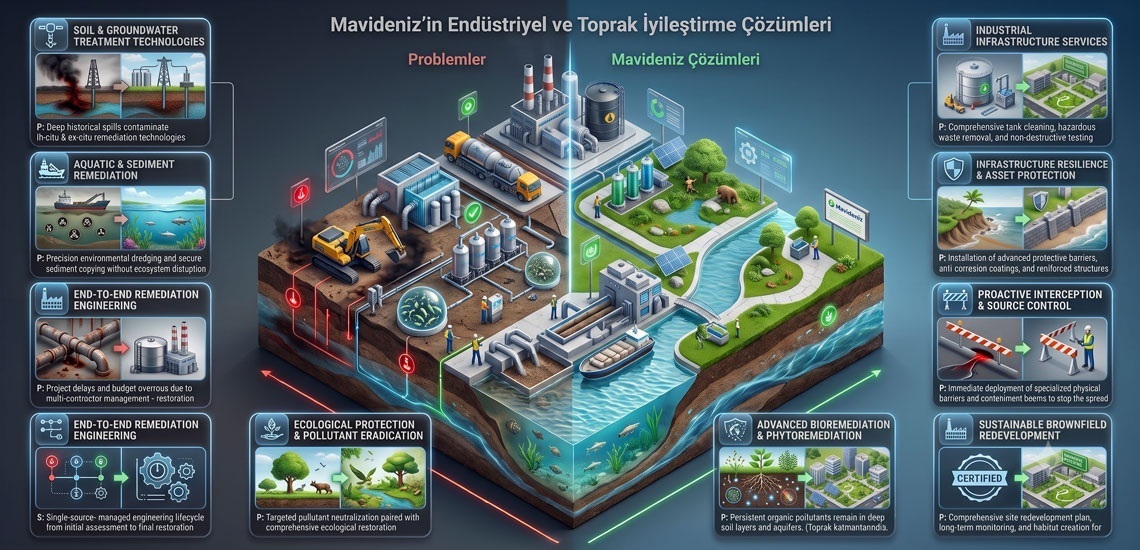
Mavi Deniz provides a highly technical, end-to-end approach to heavy industrial and soil remediation. Their solutions target land and waterways compromised by hydrocarbons, heavy metals, volatile organic compounds (VOCs), pesticides, and creosote.
Here is a detailed breakdown of the specific engineering methods, site solutions, and project management services they deploy:
1. Soil & Groundwater Treatment Technologies
Mavi Deniz utilizes a suite of in-situ (treated in place) and ex-situ (excavated and treated elsewhere) technologies to strip or neutralize contaminants without destroying the local ecosystem.
-
Dual-Phase Vacuum Extraction (DPVE): A high-vacuum system used for severe subsurface contamination. An extraction well is screened directly into the contaminated zone to lower the water table and simultaneously pull out polluted groundwater and toxic soil vapor.
-
Air Sparging: An in situ method in which large volumes of air are injected deep into the contaminated soil stratum. This forces volatile organic vapors outward and upward, where they are then captured and treated using carbon filtration. It is highly effective for hydrocarbon pollutants when soil excavation is impossible.
-
Bioremediation: A biological approach that introduces engineered aerobic and anaerobic bacteria directly into the soil. These microbes naturally feed on and break down specific chemical contaminants.
-
Soil Washing: An ex situ mechanical process in which excavated soil is scrubbed with liquid wash solutions. It is designed to separate fine-grained soils (such as silts and clays), which readily bind pollutants, from clean, coarse grains such as sand and gravel.
-
Thermal Soil Remediation: Subjecting excavated soil to extreme temperatures to vaporize stubborn contaminants. This is typically reserved for heavy hydrocarbon compounds, oils, and other petroleum products that resist biological or vacuum extraction.
-
Soil Stabilization: When contaminants cannot be safely extracted, Mavi Deniz uses chemical or physical stabilizing agents to “lock” the toxins in place, preventing them from leaching into the surrounding clean groundwater.
2. Aquatic & Sediment Remediation
When industrial pollution settles at the bottom of a water body, Mavi Deniz employs specialized marine engineering techniques to remediate toxic sediment without spreading it further throughout the ecosystem.
-
Sediment Capping: If dredging toxic sludge threatens to stir up and spread the contamination, Mavi Deniz places an engineered, relatively impermeable “cap” (often using activated carbon) directly over the polluted sediment bed. This isolates the toxins, preventing flora and fauna from coming into contact with them and diverting groundwater away from the area.
-
Dredging and Excavation: For areas where removal is viable, they use multi-purpose amphibious dredgers to extract contaminated sediment without draining the water body. The toxic sludge is then pumped to land, dewatered, and either treated or safely disposed of in confined landfill facilities.
3. Industrial Infrastructure Services
Many soil contamination issues stem from failing industrial hardware. Mavi Deniz directly handles the source of the pollution.
-
Underground Storage Tank (UST) Removal: Safely decommissioning, excavating, and disposing of aged or ruptured underground fuel and chemical tanks that actively leach into the soil.
-
Tank Cleaning and Gas-Freeing: Removing hazardous sludge, petroleum residue, and chemical buildup from large industrial storage tanks and marine vessels to prevent structural corrosion and leaks.
-
MARPOL Waste Collection: Operating specialized barges and vessels to offload and process bilge water, sludge, and solid garbage directly from commercial ships before they can pollute the marine environment.
4. End-to-End Remediation Engineering
Mavi Deniz operates as a turnkey construction and project management firm for contaminated sites. They do not just execute the cleanup; they manage the entire regulatory and scientific process:
-
Phase I Site Assessments: Conducting initial historical and physical evaluations of the site.
-
Risk Assessment & Toxicology Services: Quantifying the exact chemical danger to the environment and human health.
-
Remediation Engineering Design: Analyzing remedial alternatives to engineer the most effective, least disruptive cleanup strategy.
-
Permit Acquisition & Compliance: Handling all legal and environmental compliance documentation required by domestic and international regulators.
-
Site Restoration: Completing the final physical restoration of the land or waterway once the pollutants have been neutralized.
When analyzing Mavi Deniz’s Heavy Industrial & Soil Remediation Solutions in detail, their stated aims move beyond simple cleanup. Their objectives are engineered to address both severe ecological threats and the operational needs of heavy infrastructure.
Here is a detailed breakdown of what their remediation solutions aim to achieve:
1. Ecological Protection & Pollutant Eradication
The fundamental goal of their environmental remediation arm is to neutralize severe, concentrated toxins before they can trigger cascading ecosystem failures.
-
Toxin Reduction and Immobilization: The core aim is to strip persistent pollutants (hydrocarbons, heavy metals, pesticides) from the environment. When extraction is impossible, the goal shifts to “immobilization”—chemically or physically binding the contaminants in the soil so they cannot spread.
-
Preventing Groundwater Contamination: A primary objective of soil remediation is to prevent surface-level chemical spills and leaking underground storage tanks (USTs) from migrating into the water table, which threatens municipal drinking water and agricultural irrigation.
-
Ecosystem Isolation (Capping): In aquatic environments where dredging toxic sludge would stir up and spread pollutants, the goal is to isolate the ecosystem. They aim to engineer and place an impermeable “cap” over the contaminated sediment, physically blocking aquatic flora and fauna from contacting the toxins.
2. Infrastructure Resilience & Asset Protection
For dams, ports, and heavy industrial facilities, Mavi Deniz’s remediation aims to protect multimillion-dollar infrastructure from physical and chemical damage.
-
Safeguarding Hydroelectric Systems: By removing heavy debris, sunken logs, and invasive aquatic weeds, they aim to prevent catastrophic blockages and mechanical wear on expensive water intake screens and hydroelectric turbines.
-
Restoring Reservoir and Dam Capacity: Over time, reservoirs lose their storage volume due to heavy silt and mud accumulation. Mavi Deniz’s dredging operations aim to remove this buildup, restoring the dam’s original water-holding capacity and improving flow dynamics.
-
Extending Asset Lifespan: Regular industrial tank cleaning, gas-freeing, and vessel decontamination aim to prevent internal corrosion caused by chemical sludge buildup, thereby extending the operational life of industrial storage systems.
3. Proactive Interception & Source Control
Rather than only reacting to pollution that has already settled, their solutions aim to intercept contaminants at the source.
-
Upstream Containment: By deploying heavy-duty aquatic barriers and permanent boom systems, they aim to capture and deflect marine litter, plastics, and debris traveling down feeding rivers before it reaches high-risk zones such as dam structures or open oceans.
-
Improving Surface Water Clarity: Using specialized trash-skimmer boats (such as their Sea Cat and Mini Cat vessels), they aim to remove floating debris and algae systematically. This directly results in measurably clearer, better-oxygenated water near shorelines.
4. Turnkey Compliance & Site Restoration
From a project management perspective, Mavi Deniz aims to be a single-source provider capable of handling the entire lifecycle of a contaminated site.
-
Scientific Risk Assessment: Before any dirt is moved, they aim to quantify the danger through Phase I Environmental Site Assessments and comprehensive toxicology reports.
-
Regulatory Navigation: Their goal is to manage the legal burden for their clients, handling all necessary permit acquisitions and ensuring the remediation meets domestic and international environmental regulations.
-
Complete Lifecycle Management: Their ultimate aim is to provide “turnkey” construction management—taking a heavily polluted industrial site and handing back a fully restored, compliant, and safe plot of land or body of water ready for reuse.