
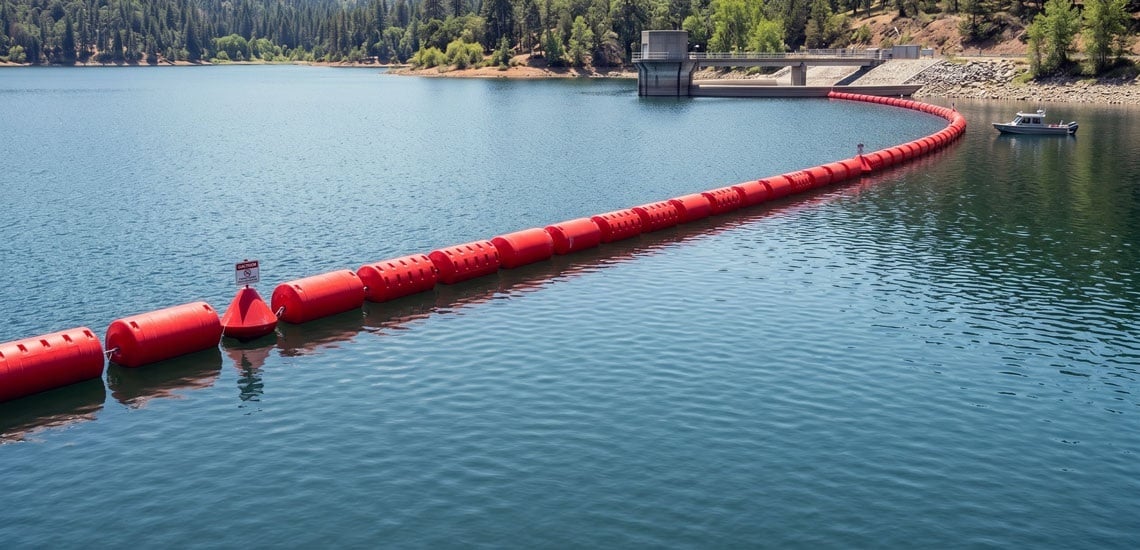
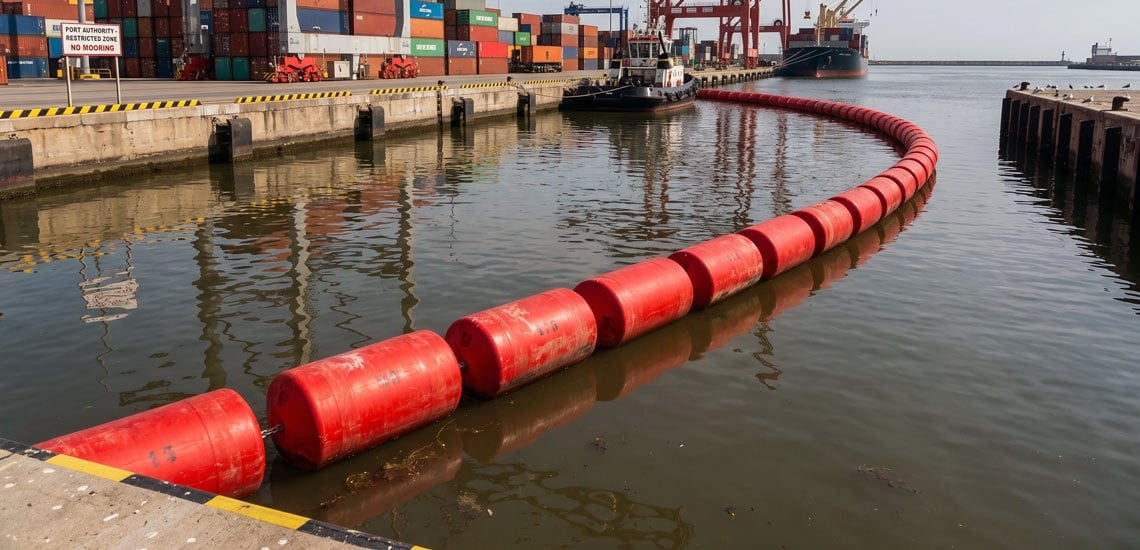
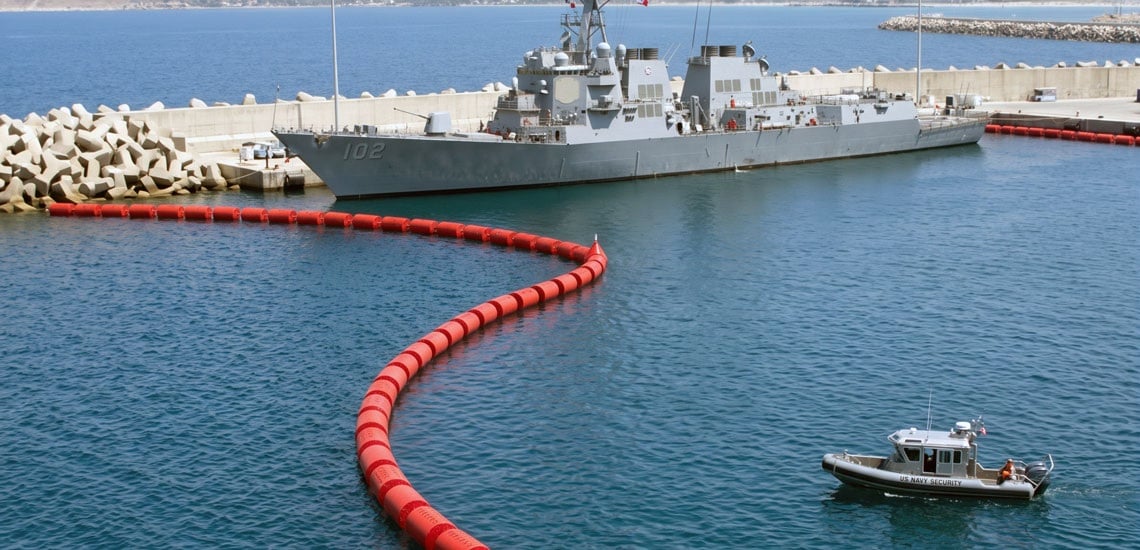
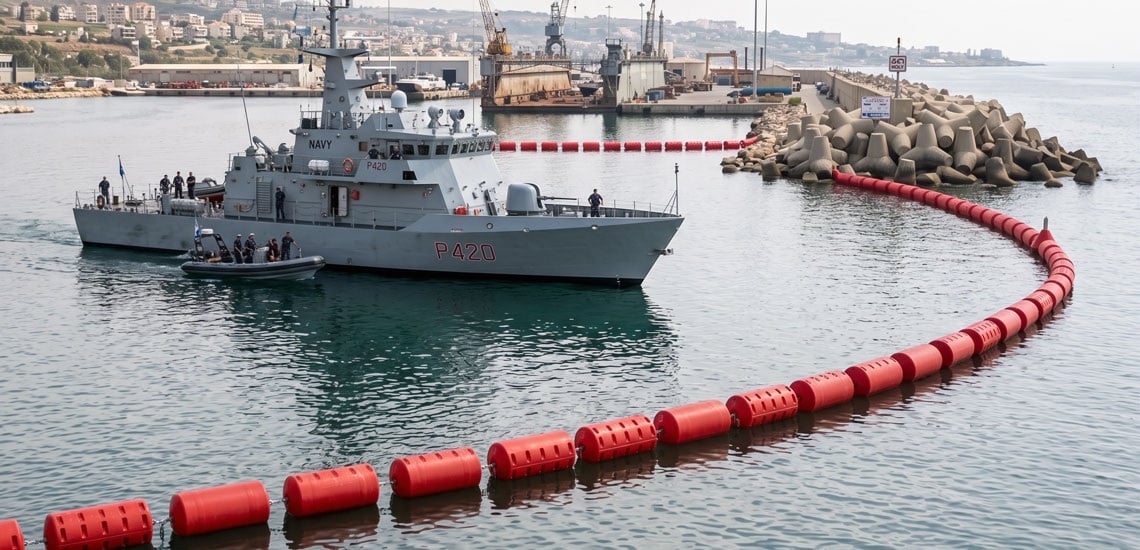
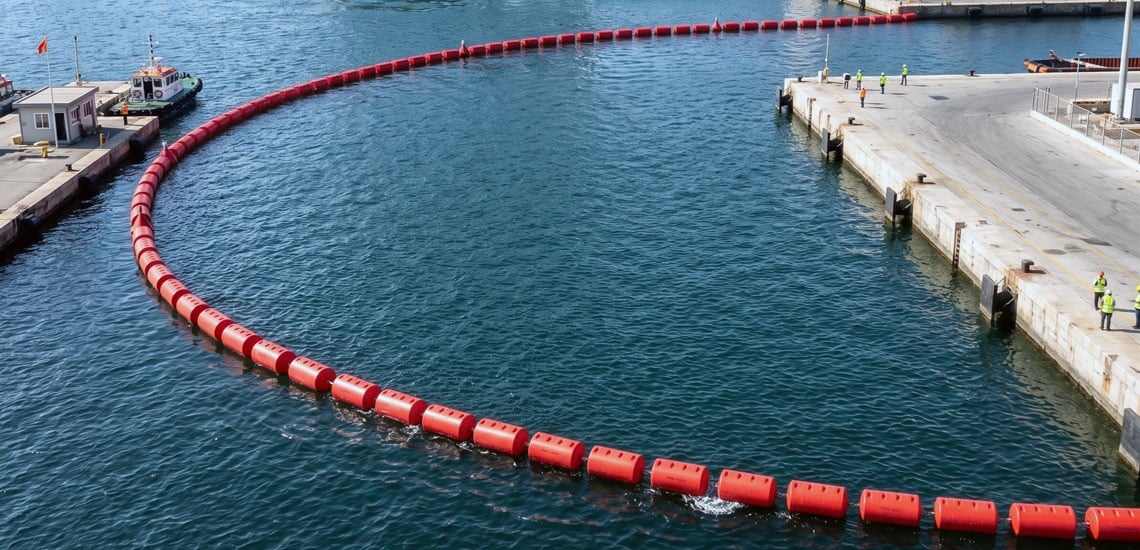
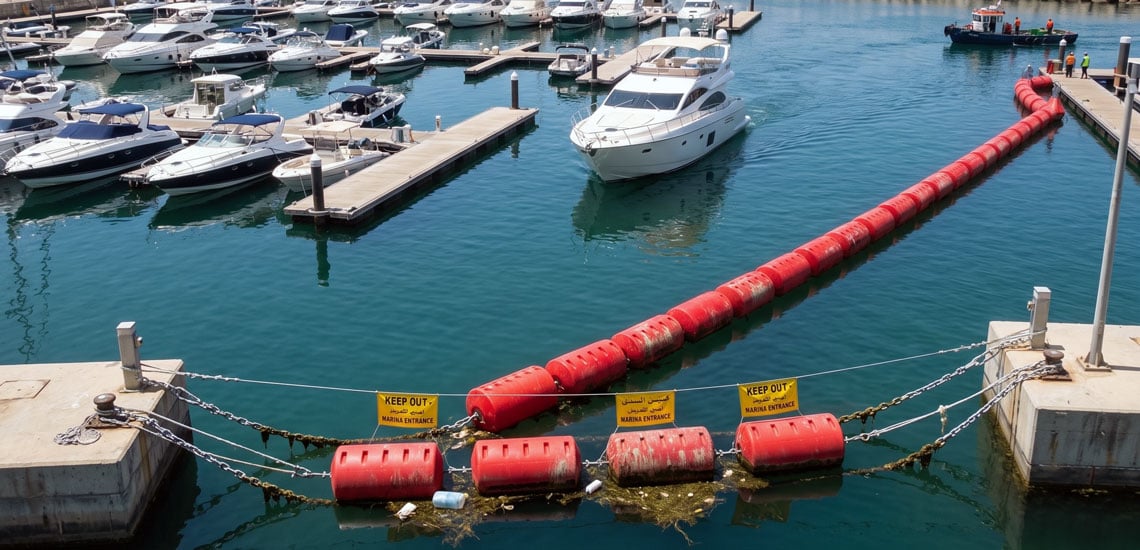
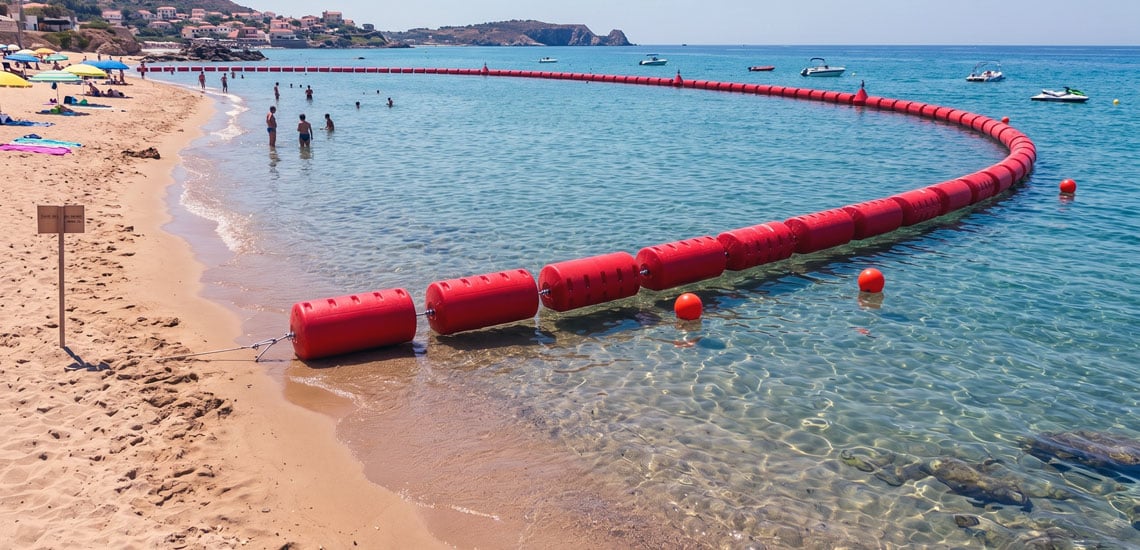
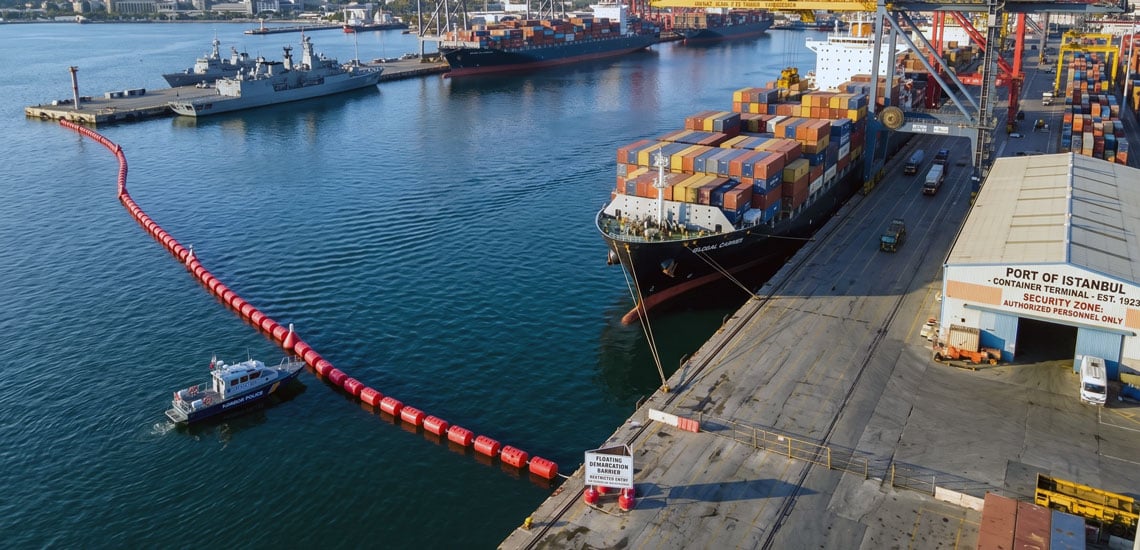
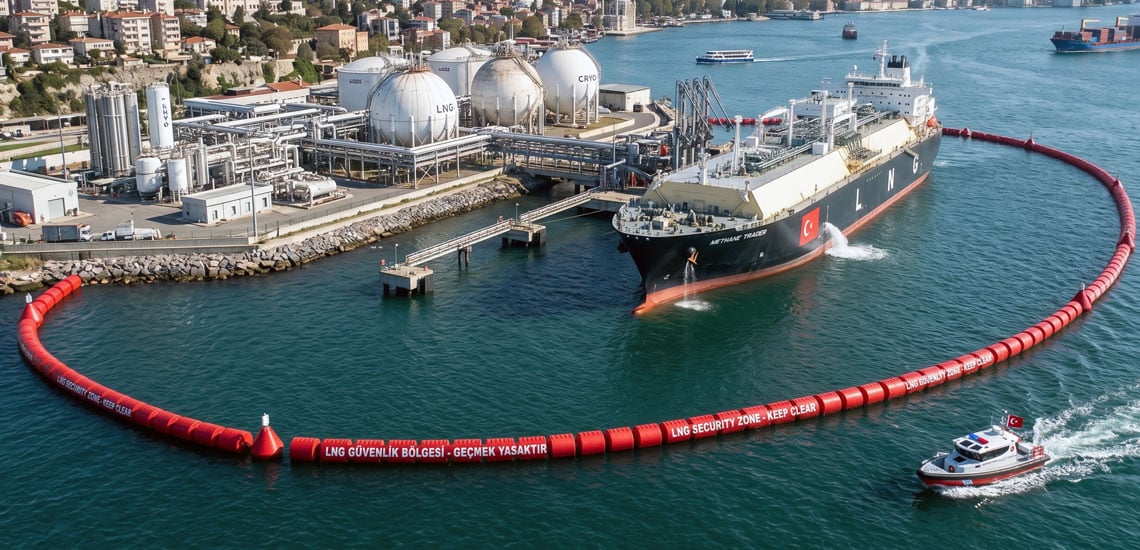
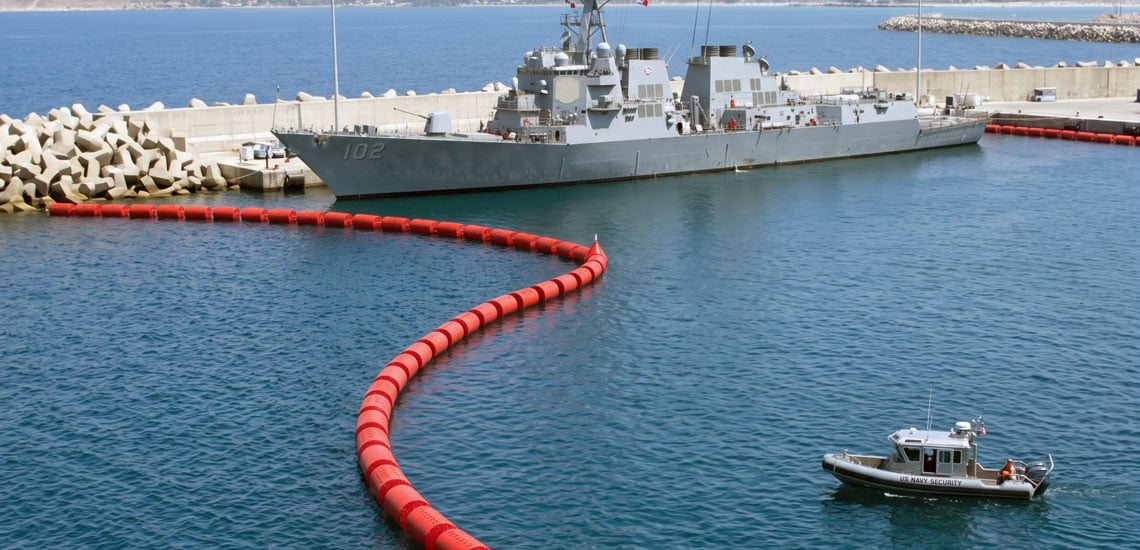
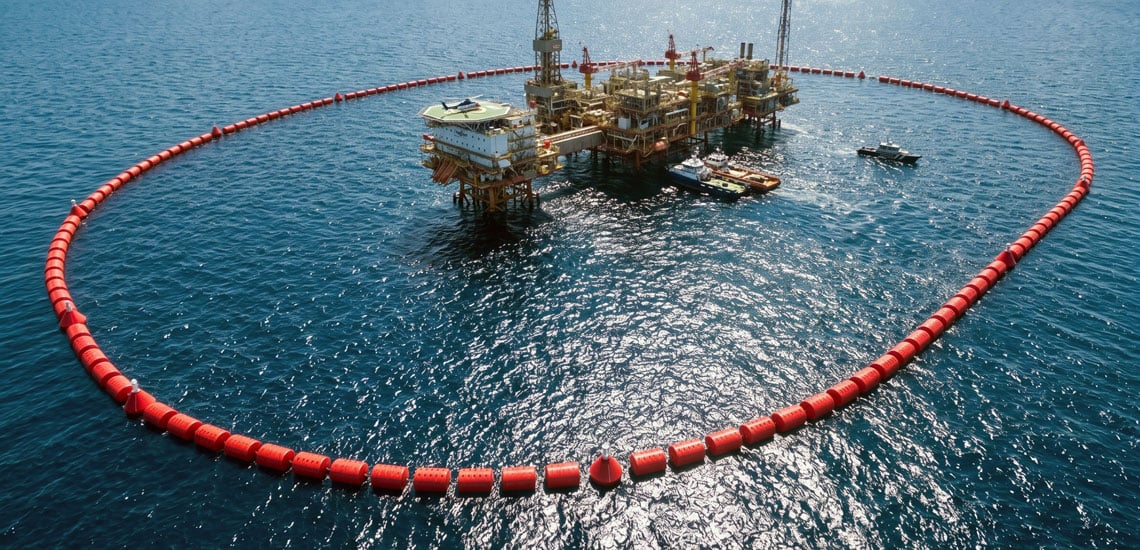
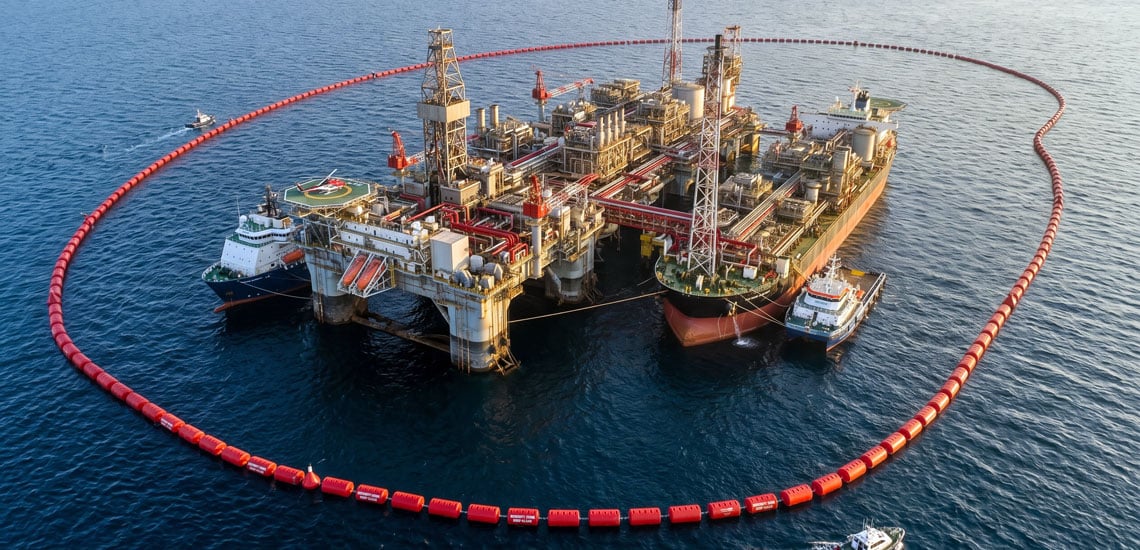
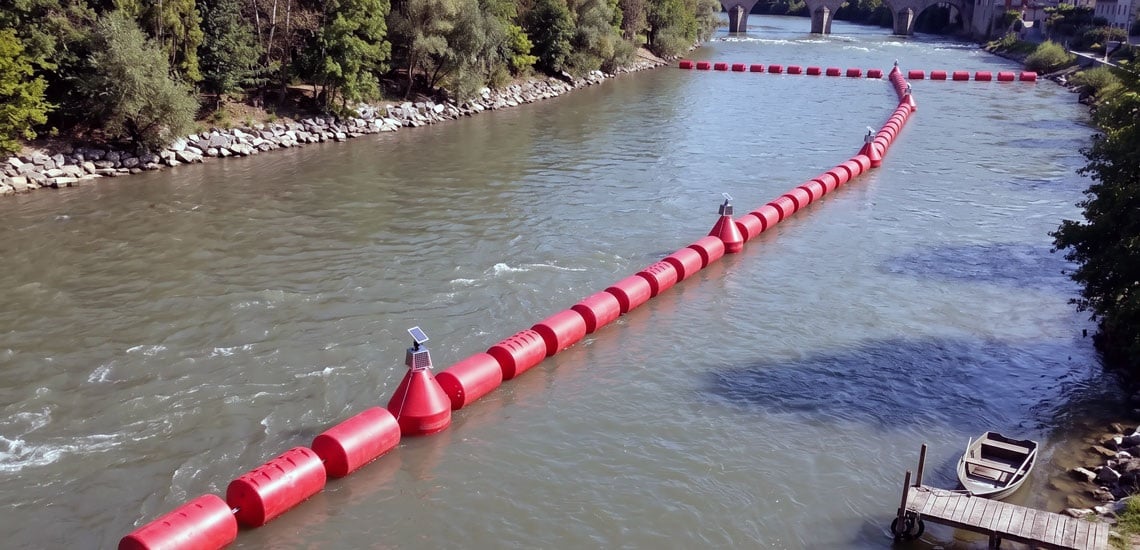
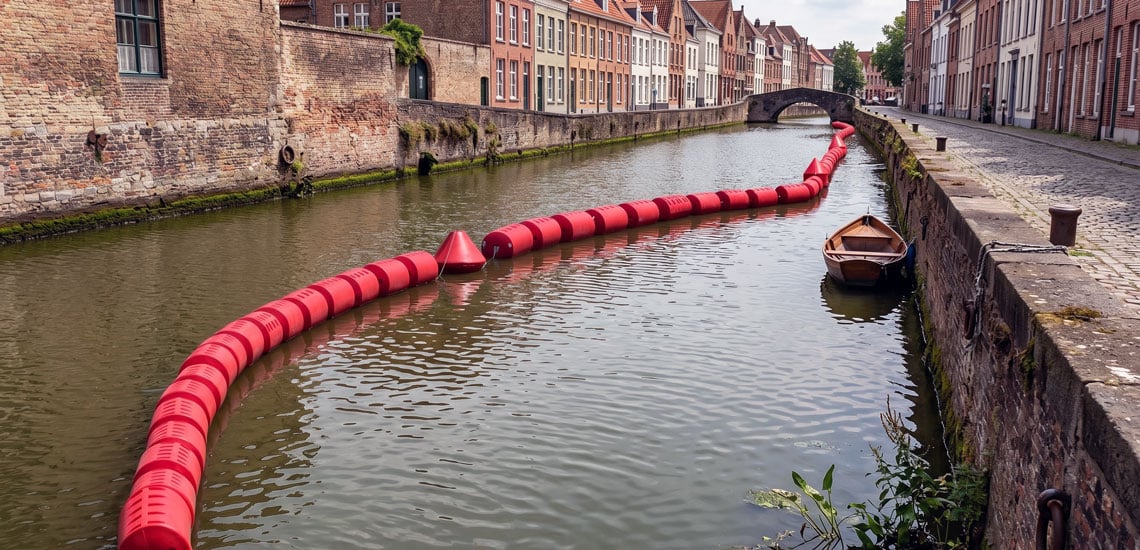
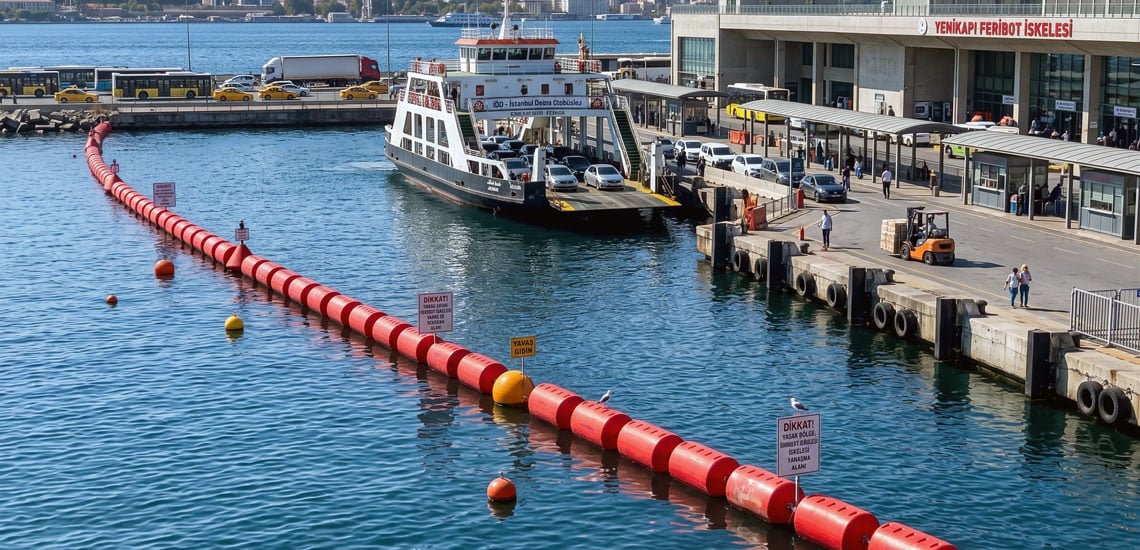
Floating demarcation barriers are highly versatile and are engineered to operate in a wide variety of aquatic environments. Their modular design, typically made from high-density polyethene (HDPE) and corrosion-resistant hardware, lets them withstand different water conditions, heavy UV exposure, and varying wave action.
- They are commonly deployed across several distinct environments:
- Beaches and Coastal Areas: To separate safe swimming zones from boat traffic, jet skis, and hazardous currents.
- Lakes and Reservoirs: To mark off restricted areas around dams, spillways, and public drinking water intakes.
- Rivers and Canals: To guide waterway traffic, mark submerged hazards, or establish safety perimeters in moving currents.
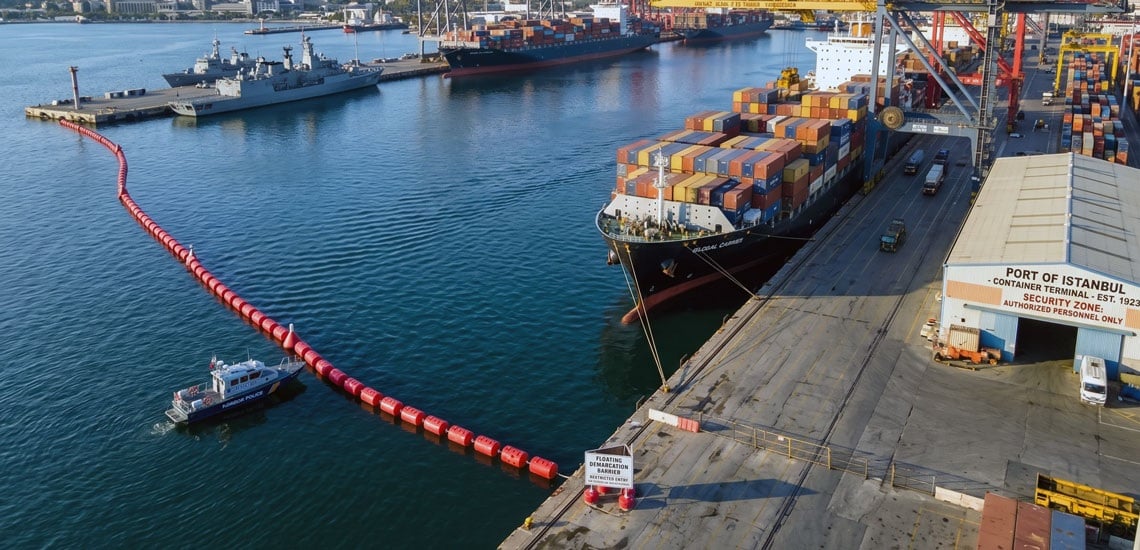
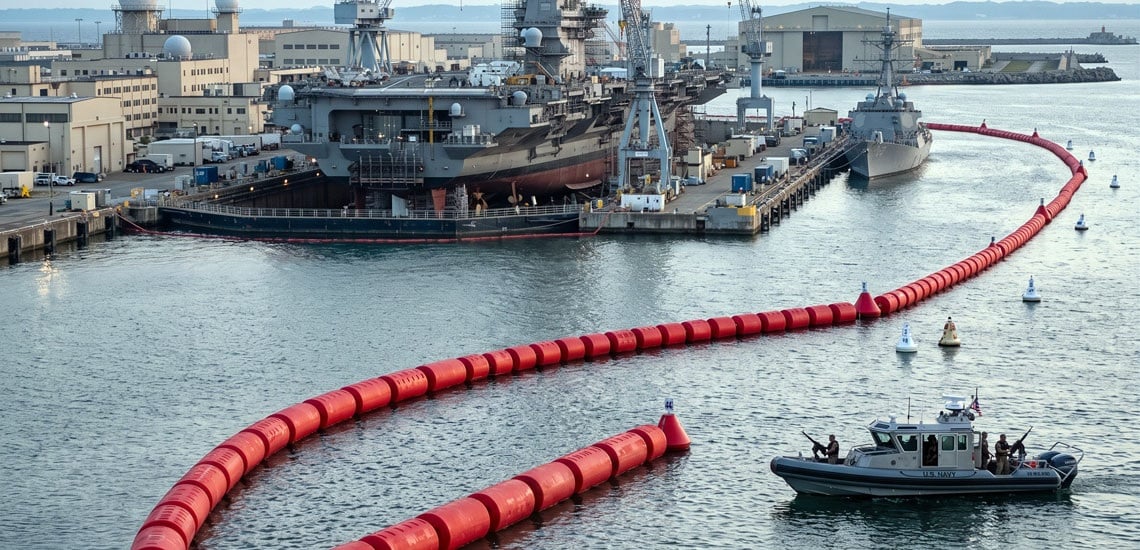
- Ports, Marinas, and Harbours: To delineate navigation channels, secure military or commercial vessels, and establish waterside security zones.
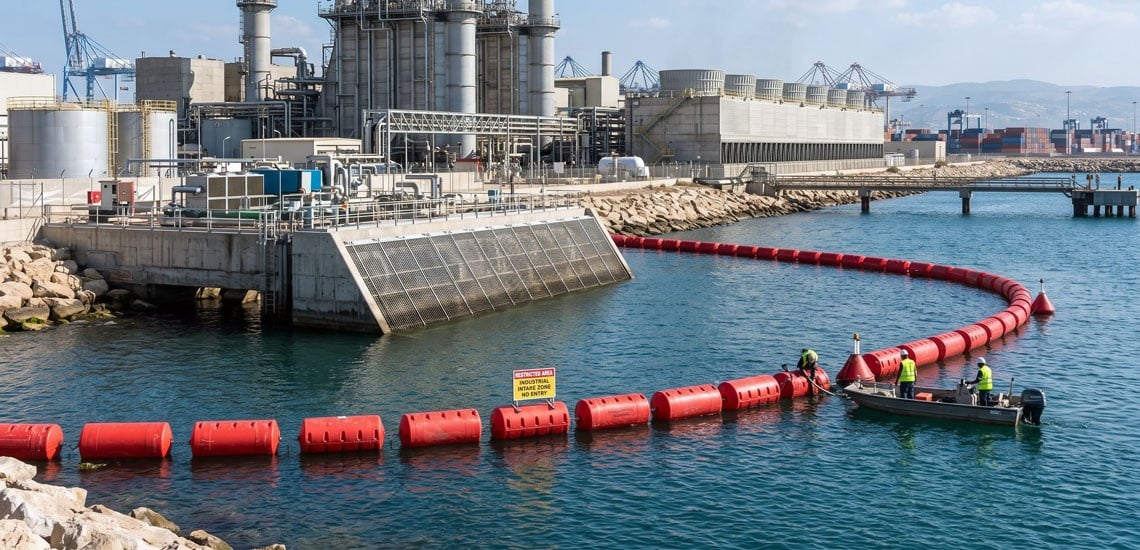
- Industrial Sites: To block debris from entering cooling water intakes at power plants or to secure marine construction sites.
Because the individual buoy units are linked together on a heavy-duty chain or steel cable, their length and configuration can be customised to fit the specific depth, tidal fluctuations, and layout of almost any body of water.
Floating demarcation barriers serve as physical and visual shields against several distinct marine hazards:
- Unauthorised Watercraft: They physically block boats, jet skis, and commercial vessels from entering designated swimming zones, shallow waters, or private properties.
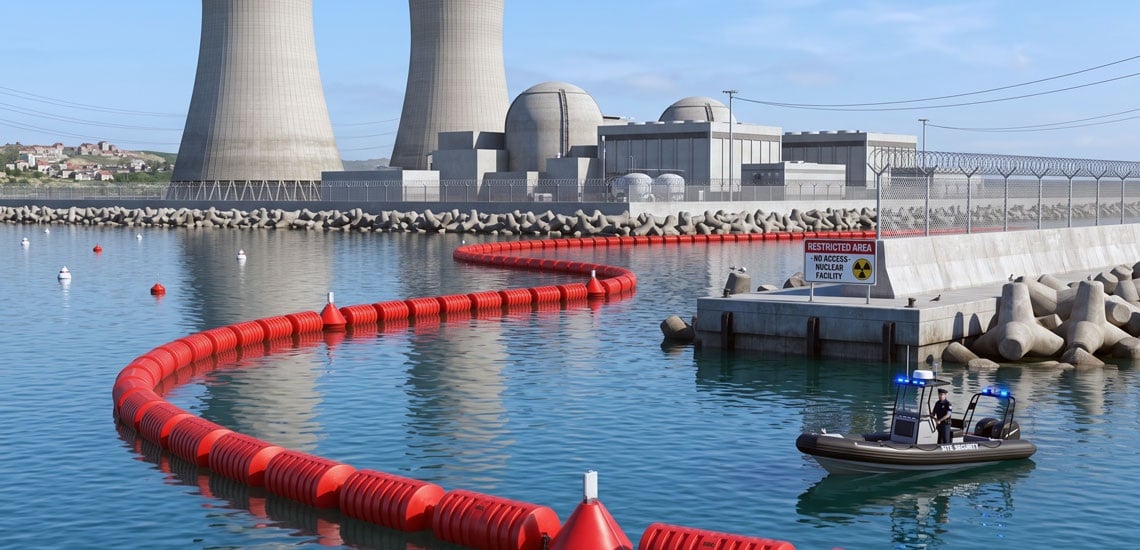
- Security Threats: Heavy-duty versions act as anti-intrusion perimeters to protect naval bases, commercial ports, and critical infrastructure (like power plants) from waterside attacks or trespassing.
- Floating Debris: They intercept logs, trash, and ice, preventing them from clogging municipal water intakes, hydroelectric dam turbines, or industrial plant cooling systems.
- Dangerous Water Conditions: They keep swimmers and recreational boaters safely away from hazardous areas like spillways, dam intakes, strong currents, and active marine construction sites.
The primary purpose of floating containment barriers is to separate different usage areas by establishing a clear, visible boundary line on the water.
- Visual Marking: Clearly demarcating swimming areas, hazardous zones (such as dam spillways or strong currents), or private property to separate them from watercraft.
- Traffic Guidance: Ensuring boats and other marine vessels remain within safe navigation channels and regulating water traffic.
- Physical Security Perimeter: Creating a protected zone around ports, military facilities, or water intake structures (such as those at power plants) to prevent unauthorised entry or approach.
- Debris Control: Containing floating refuse, tree branches, or ice masses along a specific line to prevent them from reaching sensitive industrial systems or beaches that must be kept clean.
Durability: Made from high-density polyethene (HDPE), these barriers resist UV rays, heavy waves, and physical impacts. Their interiors are typically filled with closed-cell polyurethane foam to prevent sinking, even if the outer shell is punctured or damaged.
Maintenance: Thanks to their modular design and corrosion-resistant plastic construction, they require minimal maintenance. Periodic maintenance primarily involves:
- Visual inspection of connectors (galvanised or stainless steel chains, shackles, ropes) for wear or corrosion.
- Cleaning off excessive marine growth (mussels, algae) from the submerged sections of the barriers.
- Checking the tension of the barrier line and the condition of the anchor points.
Longevity: Thanks to rust-resistant hardware and UV-protected outer surfaces that withstand sunlight, these systems have a very long service life (typically 10–20 years, depending on environmental factors), even in saltwater and harsh marine conditions. A single damaged module can be easily replaced without affecting the entire system, further extending the system’s overall lifespan.