
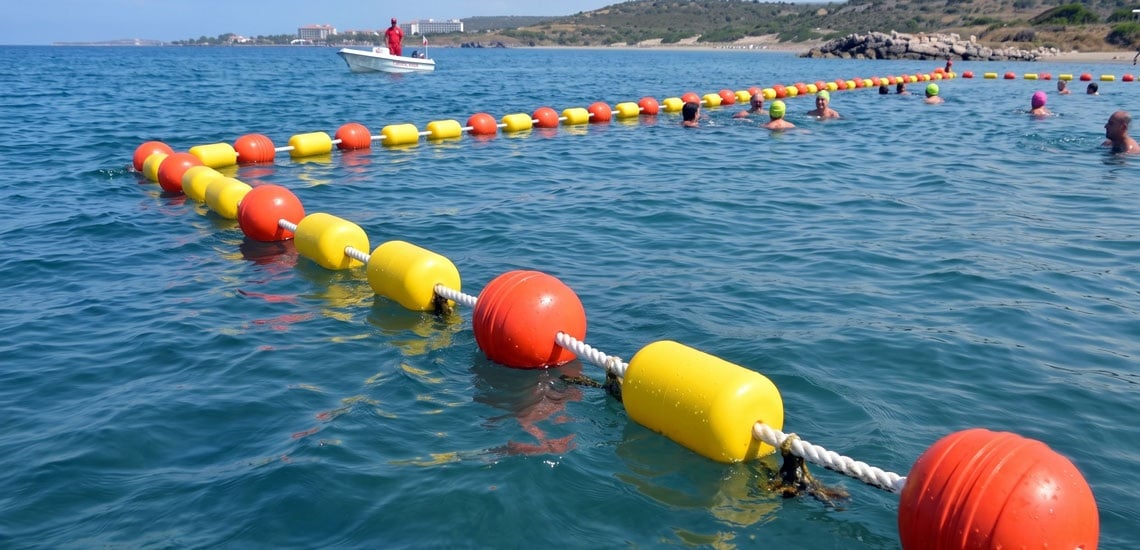
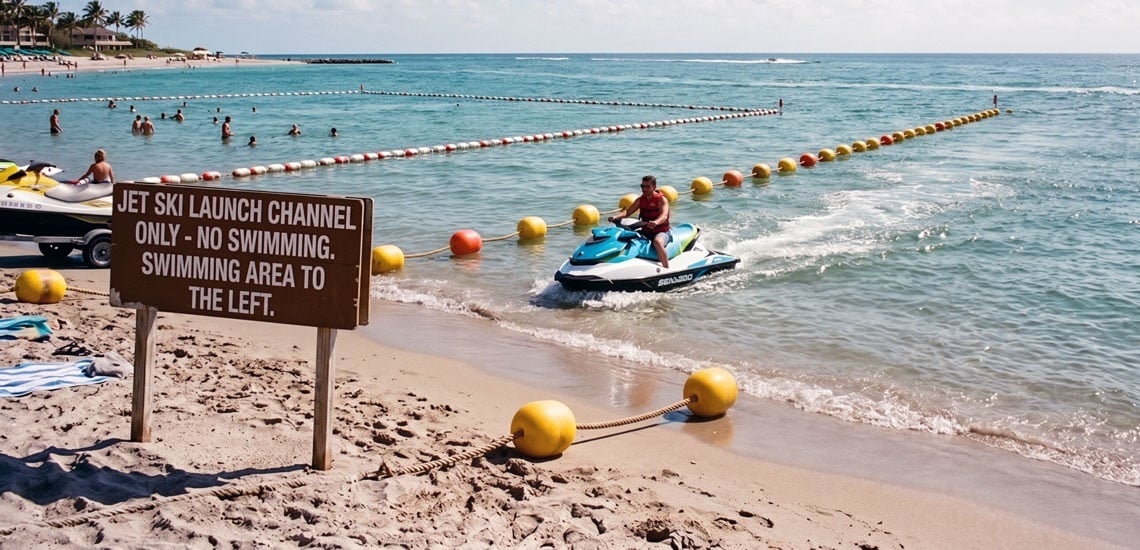
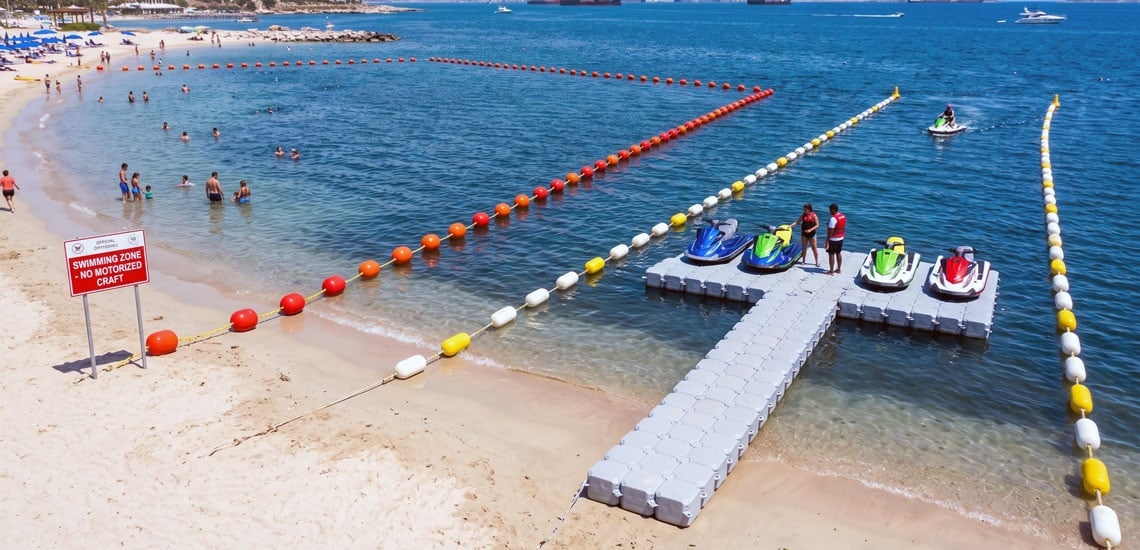
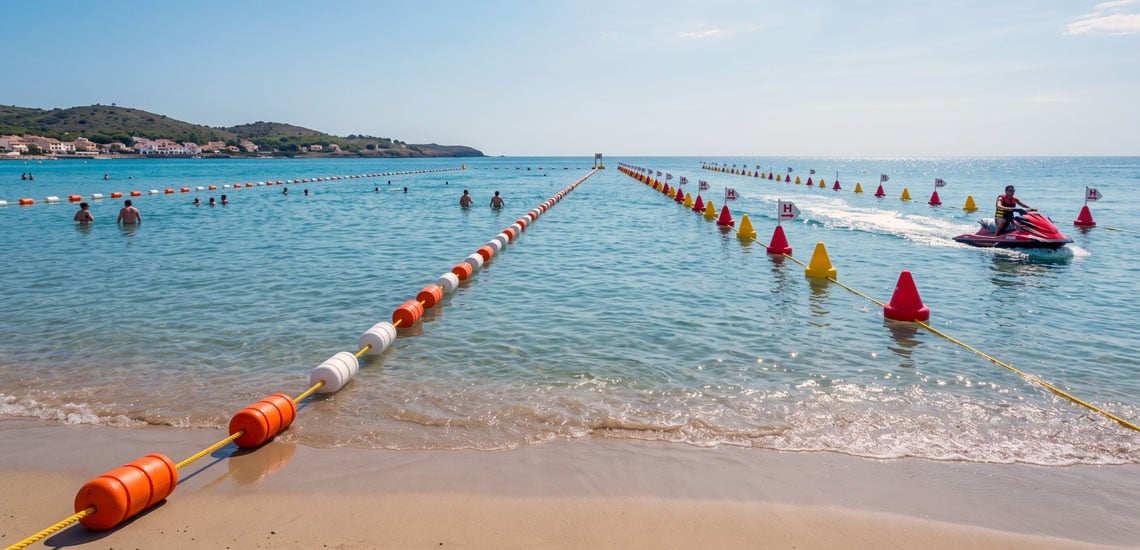
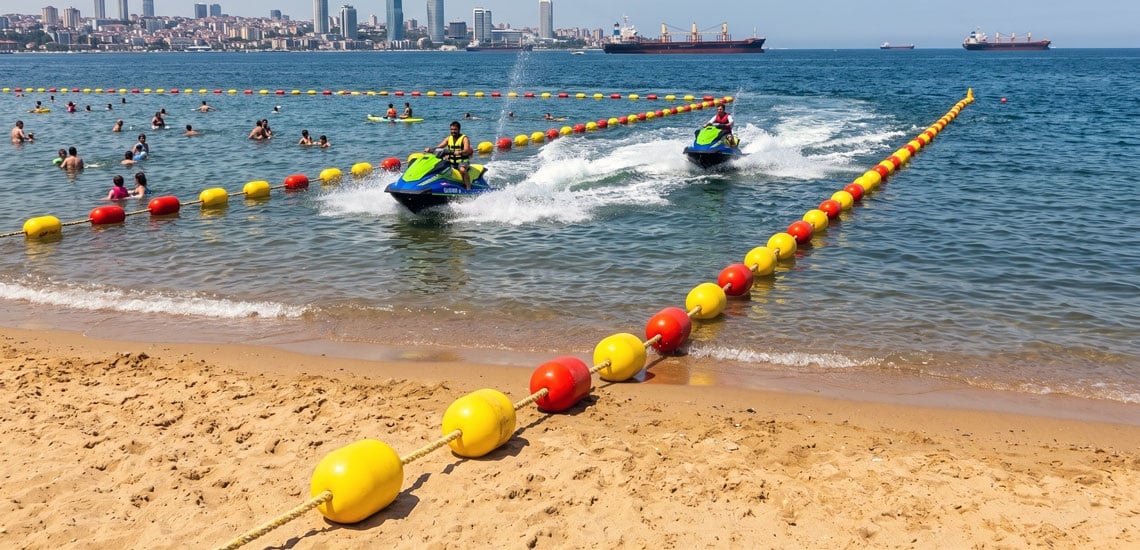
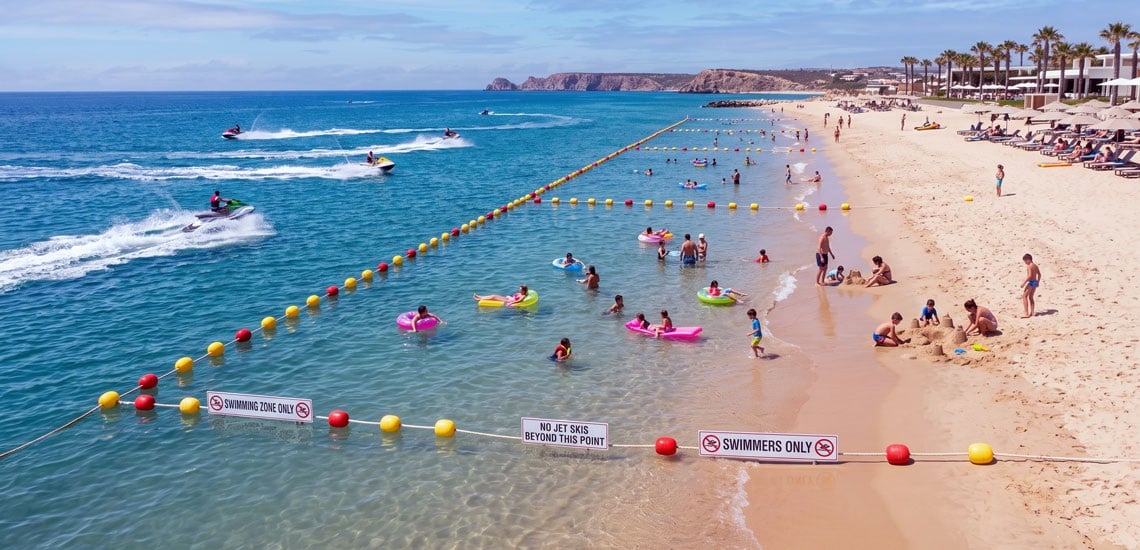
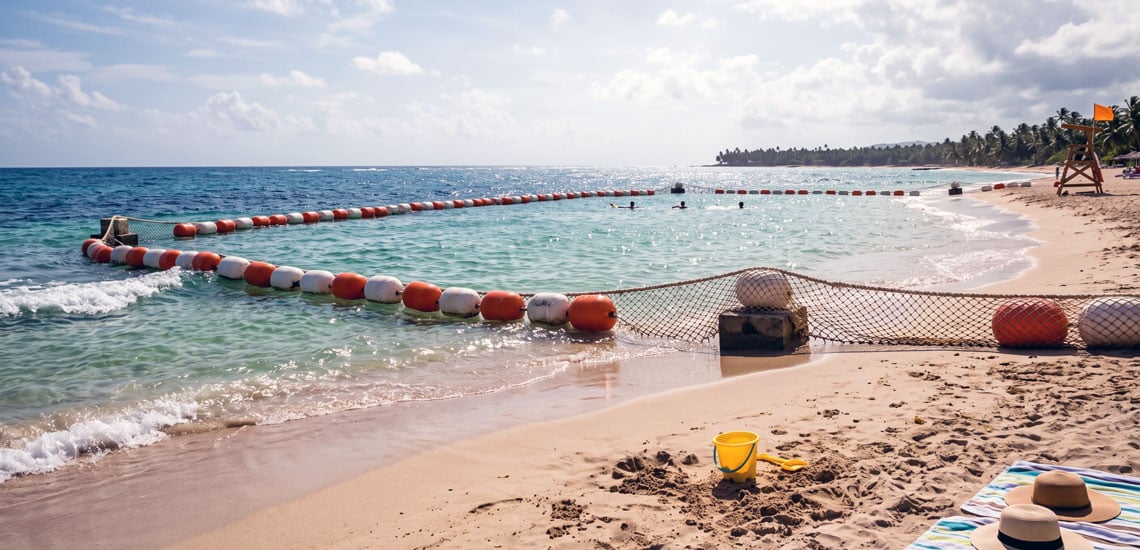
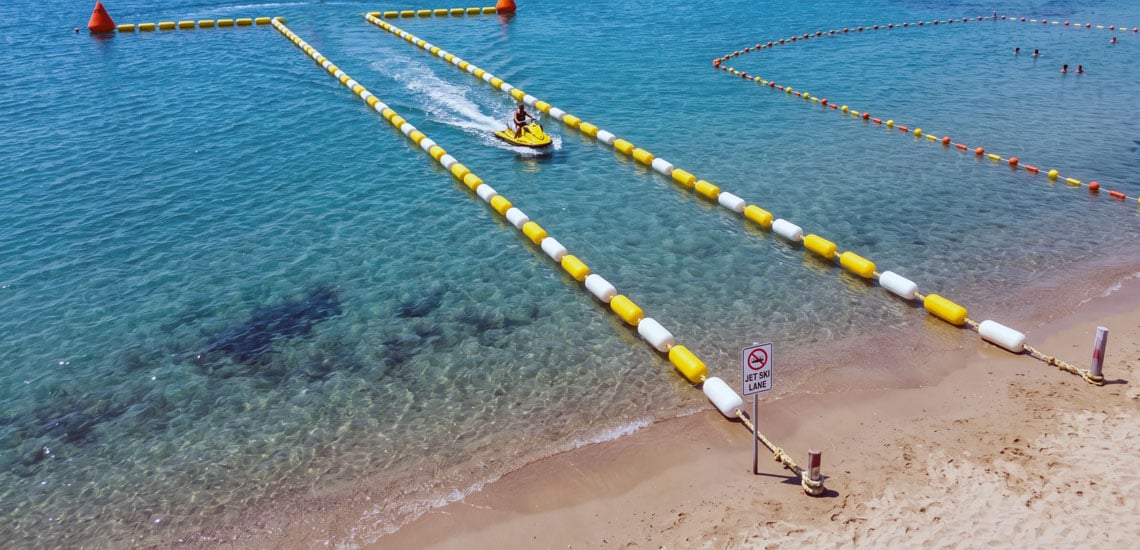
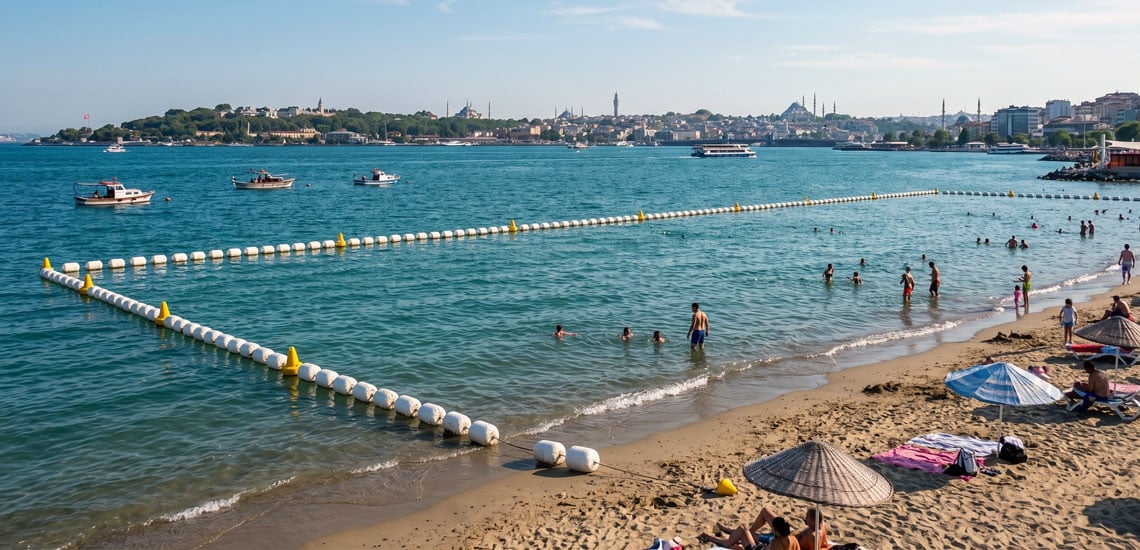
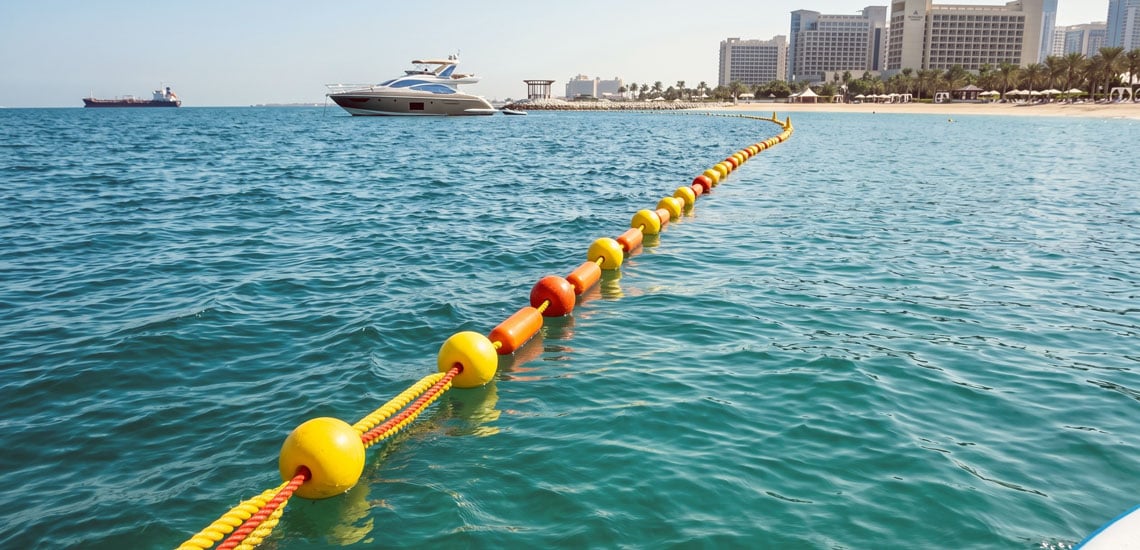
Swimming area barriers and buoy systems can be adapted to a wide range of challenging environmental conditions and intended uses beyond the calm coastal waters shown in the images. System constraints require that this information be presented in Turkish.
- Harsh Weather and Wave Conditions (Open Waters): Open-ocean versions are made from heavy-duty polyethene to withstand high waves and storms. High-strength stainless steel chains or thick steel cables run through the buoys to prevent them from breaking under wave and wind stress.
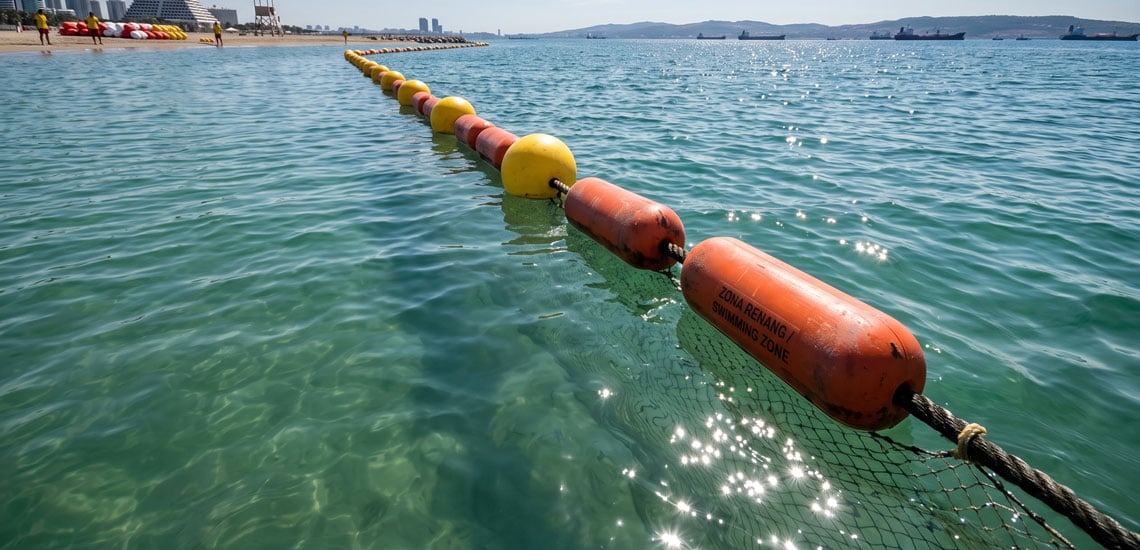
- Underwater Net Integration (Biological Protection): The images show only the physical boundary at the water’s surface. However, professional barrier systems often feature deep underwater nets (jellyfish/shark nets) beneath them that physically prevent jellyfish, sharks, and other dangerous marine life from entering the swimming area.
- Night Visibility and Warning Equipment: To ensure 24-hour safety, independent solar-powered LED flashing lights and marine-grade reflective tape are integrated into the barrier lines. This prevents boats from entering the swimming areas in the dark.
- Industrial and Environmental Control: The same buoy concept is used not only to protect swimmers but also—through specialised designs featuring attached skirts or tarpaulins—to contain oil spills (oil booms), enclose chemical waste, or trap floating surface debris (debris booms) in rivers, harbours, and industrial zones. Hidden Anchoring (Securing) Infrastructure: Although they appear light and mobile on the water’s surface, massive underwater infrastructure prevents the system from drifting away in strong currents and tides. The buoy lines are securely anchored via tension cables to concrete blocks weighing tons—and specialised marine anchors—positioned on the seabed or lakebed.
Swimming zone barriers and boom systems are designed to protect against several physical and environmental hazards:
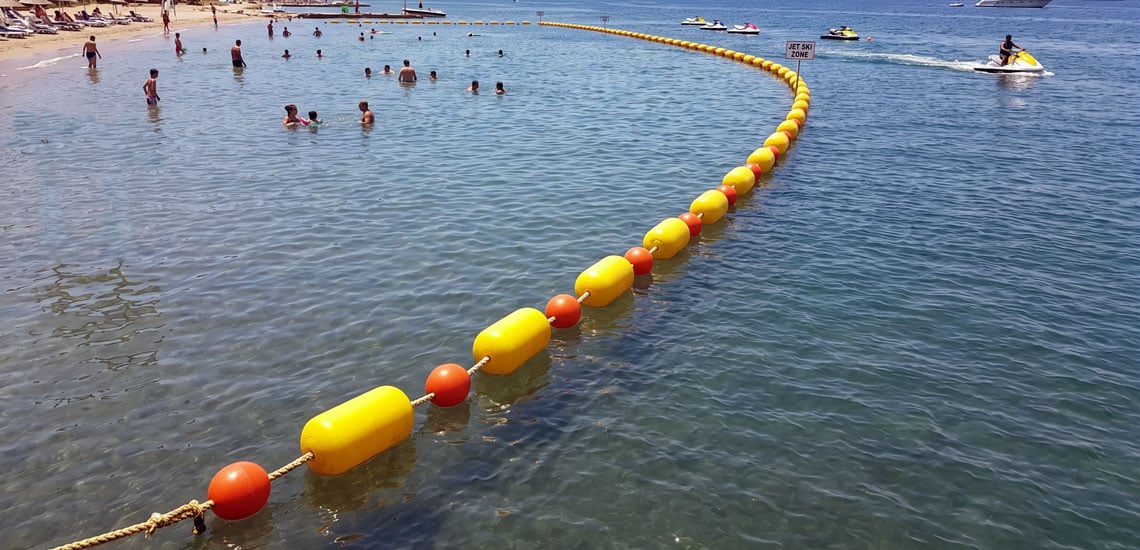
- Motorised Watercraft: They establish a strict boundary to prevent boats, jet skis, and commercial vessels from entering areas populated by swimmers, reducing the risk of accidental collisions.
- Dangerous Marine Life: When equipped with submerged netting, they physically block hazardous creatures—such as sharks, jellyfish, and stingrays—from entering the designated swimming area.
- Environmental Pollution: Specialised containment booms protect safe zones and coastal environments by trapping oil spills, chemical runoff, algae blooms, and floating surface debris.
- Hazardous Water Conditions: By confining swimmers to a surveyed and monitored area, the buoys indirectly protect them from drifting into dangerous rip currents, deep underwater drop-offs, or active shipping lanes.
The primary objectives of swimming area barriers and buoy systems are as follows:
- Protection Against Marine Vessels: Preventing boats, jet skis, and speedboats from entering swimming zones to avoid potential collisions and injuries.
- Defining Safe Boundaries: Clearly marking the safe zone for swimmers to prevent them from venturing too far from the shore.
- Warning of Dangerous Currents and Depths: Restricting swimmers from drifting into strong undertows, areas with sudden drops in depth, or rocky zones.
- Protection Against Marine Life: Preventing dangerous marine creatures—such as jellyfish and sharks—from entering the swimming area when underwater netting is installed.
- Facilitating Lifeguard Supervision: Establishing a visual boundary to clarify the lifeguards’ area of responsibility and expedite response times during emergencies.
- Environmental and Pollution Control: Preventing floating debris, algae accumulations, or oil spills from reaching the beach and swimming area.
The durability, maintenance requirements, and longevity of swimming area barriers and buoy systems depend on the following key characteristics:
Durability
- UV and Corrosion Resistance: The buoys are made from high-density polyethene (HDPE) with UV-stabilizing additives that prevent cracking and colour fading from sunlight. They are completely resistant to saltwater corrosion.
- Impact and Sinking Protection: The buoy bodies are typically filled with closed-cell polyurethane foam. This ensures that even if an impact punctures the outer shell, the buoy does not take on water or lose its buoyancy.
- High Tensile Strength: The internal chains and ropes connecting the buoy lines are made of stainless steel or marine-grade braided polypropylene to withstand storm forces and high wave loads.
Maintenance
- Biofouling Removal: Teams periodically clean algae, mussels, and shellfish from submerged surfaces using high-pressure water to prevent reduced buoyancy.
- Hardware and Anchor Inspection: Divers or maintenance teams conduct seasonal inspections of seabed concrete anchors, shackles, swivels, and tension lines to check for wear, rust, or loosening.
- Seasonal Storage: In regions where barriers are not used during winter or are at risk from severe storms, teams remove them from the water, wash them, and store them in a dry area to prevent deterioration. Longevity (Long-lasting Features)
- Modular and Replaceable Design: Each float, lock, or rope segment making up the system is independent. You can quickly replace a single damaged part on-site without replacing the entire line.
- Industrial-Grade Colour Durability: Because bright yellow, orange, and red pigments are integrated into the raw material during production, the surface does not peel, ensuring high visibility for years.
- Service Life: With proper anchor installation, regular seasonal cleaning, and winter storage, a professional marine barrier system provides trouble-free service for 5 to 10 years.