
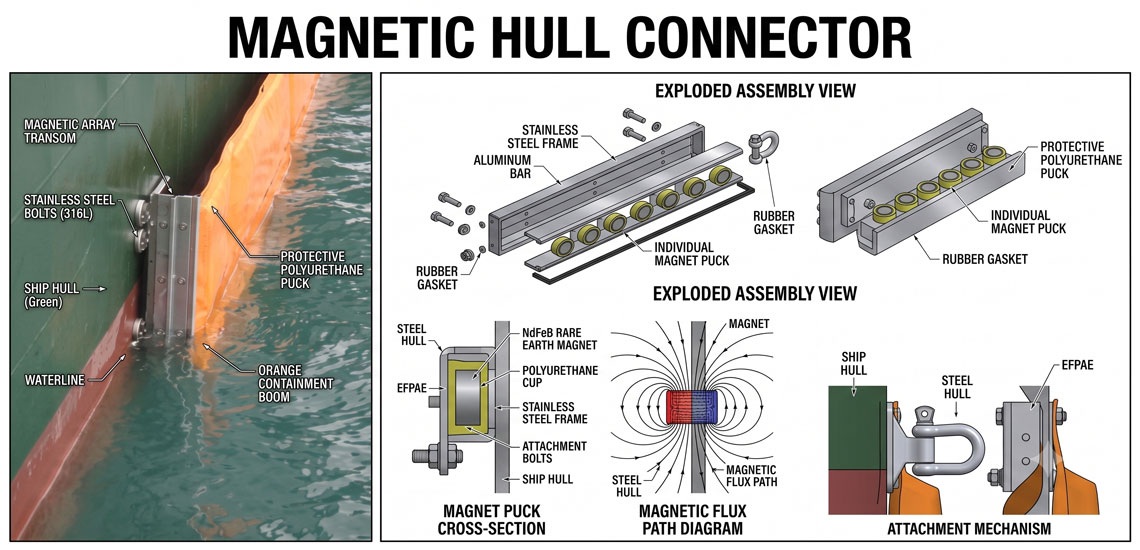
A Magnetic Hull Connector is a specialised piece of marine hardware used primarily in oil spill response and containment operations. Its main purpose is to securely attach an oil containment boom directly to the bare steel hull of a ship or a metallic dock structure.
Here is a breakdown of how it works and why it is used:
How It Works
- Magnetic Adhesion: Instead of tying a boom to a cleat or bollard on the ship’s deck (which might not line up properly with the water), the connector uses an array of powerful rare-earth magnets (typically Neodymium/NdFeB) to lock instantly onto the side of the steel hull.
- Boom Attachment: The connector features a rail or shackle system on its outer face where the end of the oil containment boom is attached.
- Protective Housing: The heavy-duty magnets are usually encased in polyurethane cups or rubber gaskets. This serves two purposes: it protects the ship’s hull and paint from scratching, and it prevents dangerous metal-on-metal sparks in highly flammable oil spill environments.
Key Advantages
- Creates a Tight Seal: By attaching the boom directly to the hull right at the waterline, it prevents oil from escaping through the gap that would normally exist between a vessel and a floating boom.
- Rapid Deployment: It allows response teams to quickly snap the boom into place exactly where they need it, without needing to run ropes up to the ship’s deck.
- Adjusts to the Waterline: As the ship’s draft changes (moves up and down in the water as it is loaded or unloaded), the magnetic connector can often be slid or repositioned to ensure the boom stays perfectly level with the water surface.
In short, it is a heavy-duty, magnetic anchor point that ensures an oil spill barrier stays flush against a ship’s hull to maximise containment.