
Mavi Deniz is a Turkish market leader in marine environmental solutions, specializing in the design and manufacture of multi-purpose anti-pollution vessels, amphibious machines, and oil spill response equipment.
Their Alternative Energy Solutions and Green Power Options are specialized engineering initiatives designed to align with the International Maritime Organization’s (IMO) strategy to reduce marine greenhouse gas emissions to zero by the end of the century.
Instead of relying solely on traditional diesel propulsion, Mavi Deniz integrates clean energy technologies directly into their fleet of anti-pollution vessels, water buses, and amphibious cleanup machines.
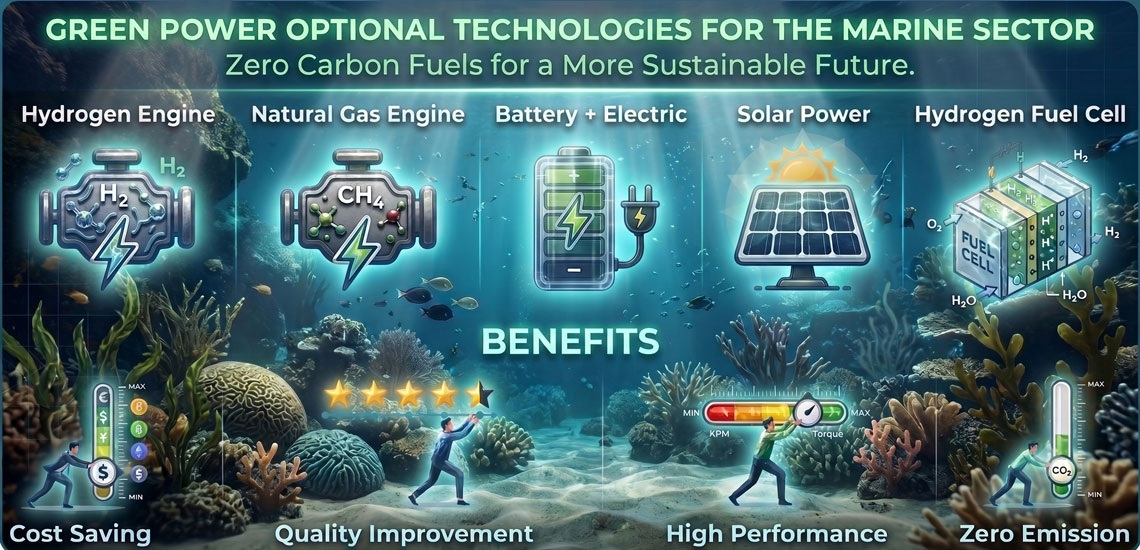
The Green Power Options
Mavi Deniz can fully integrate several dual-fuel and zero-emission power sources into their vessels’ propulsion systems and deck equipment (like skimmers, cranes, and trash conveyors):
-
-
Solar Energy Systems: Utilizing onboard solar panels to power internal systems and deck equipment, or to provide auxiliary propulsion power.
-
Battery Power Systems: Fully electric configurations that enable vessels to operate silently and with zero emissions, especially useful in sensitive ecological areas such as marinas, inner-city rivers, and wildlife reserves.
-
Hydrogen Fuel Cell Systems: Advanced zero-emission technology that generates electricity from hydrogen to power the vessel’s operations.
-
LPG (Liquefied Petroleum Gas) Systems: A cleaner-burning alternative fuel that significantly reduces particulate matter and greenhouse gas emissions compared to standard marine diesel.
-
By outfitting their specialized craft—such as the Sea Cat (a trash-skimming catamaran) and their Amphibious Machines (used for wetland conservation and dredging)—with these green power options, Mavi Deniz allows ports, municipalities, and environmental agencies to conduct pollution cleanup without adding new emissions to the environment during the process.
Mavi Deniz’s Alternative Energy Solutions aim to achieve a balance between heavy-duty industrial capability and strict environmental preservation. Their overarching mission is to protect and preserve global aquatic ecosystems—including oceans, rivers, lakes, and dams—without adding secondary pollution during their cleanup and maintenance operations.
Specifically, by integrating alternative and green energy into their fleets, Mavi Deniz aims to achieve the following core objectives:
-
Zero-Emission Cleanups: By utilizing battery and hydrogen fuel cell systems, their vessels can respond to oil spills, harvest aquatic weeds, or collect marine litter without emitting greenhouse gases, ensuring the recovery process doesn’t further pollute the air.
-
Noise Reduction in Sensitive Habitats: Traditional marine diesel engines are incredibly loud, disrupting local wildlife. Electric and solar-powered amphibious machines and skimmers operate almost silently, allowing them to work in protected wetlands, marinas, and ecological reserves without disturbing marine and avian life.
-
Compliance with Stricter Regulations: The maritime industry is facing increasingly strict emission control areas (ECAs) and the International Maritime Organization’s (IMO) mandate to eliminate marine greenhouse gas emissions. These solutions ensure Mavi Deniz’s vessels—and the municipalities that hire them—remain compliant with future legal and environmental standards.
-
Fuel Efficiency and Cost Reduction: By incorporating solar panels for auxiliary power or utilizing dual-fuel LPG systems, vessels consume significantly less traditional fuel. This not only lowers the carbon footprint but also reduces the operational costs of long-term projects like dredging or buoy laying.
-
Sustainable Innovation: They aim to advance the industry standard by designing and manufacturing highly recyclable, energy-efficient equipment that demonstrates that heavy marine engineering can be both affordable and environmentally responsible.
Ultimately, Mavi Deniz’s goal is to intercept and remediate pollution at its source while proving that heavy marine operations do not have to come at the expense of the environment.
Application Scenarios